



What Is OEE and What Does OEE Stand For? How Is It Used in Manufacturing?
What is oee is one of the most important metrics in manufacturing, used to measure productivity by evaluating availability, performance,...
Devamını Oku
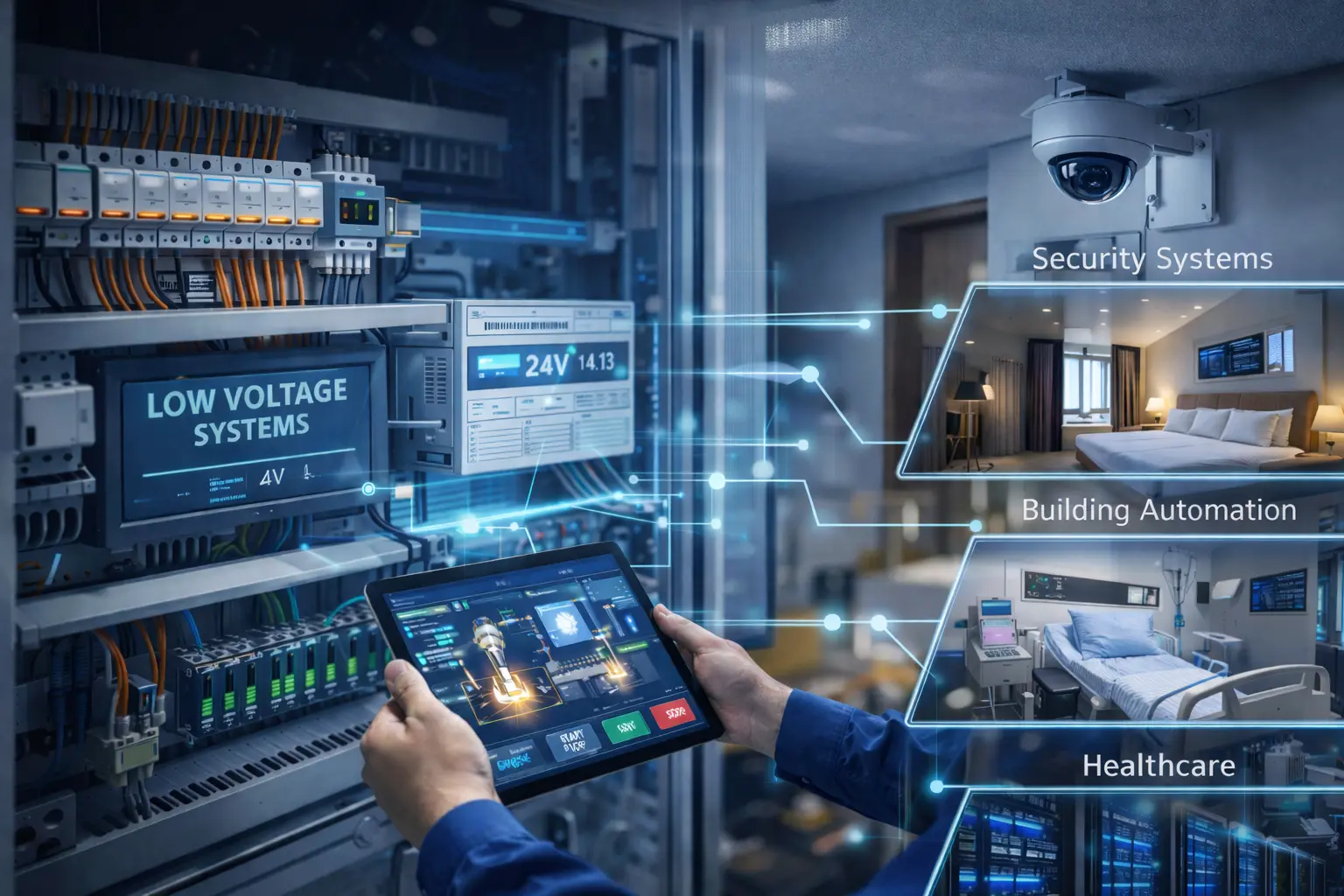
Low voltage systems refer to electrical infrastructures that operate at 50 volts or below, primarily used for communication, safety, control, and automation in residential, commercial, and industrial buildings. Unlike high-voltage systems, they are designed for minimal risk and are safe for human interaction, making them essential for environments where electrical safety is paramount. These systems form the backbone of modern smart buildings, supporting a wide range of technologies such as fire alarms, CCTV surveillance, access control, and structured cabling.
Low voltage systems enhance safety, efficiency, and technological integration across various applications. From large-scale office complexes and hospitals to hotels, shopping malls, and industrial plants, these systems provide critical functionality. Their low power requirements also translate to energy savings and easier maintenance. Moreover, low voltage systems can be incorporated during the construction phase of new buildings or retrofitted into existing infrastructures, allowing older buildings to be modernized without major structural changes. Their flexibility and adaptability make them indispensable in today’s smart building ecosystem.
Low voltage refers to an electrical supply system operating at a voltage level that is safe to touch and poses minimal risk of electrical shock. Typically, this means voltages below 50V AC or 120V DC, which are considered safe for use in spaces where people may come into contact with exposed wiring or components. These voltage levels are commonly found in systems powering communication devices, fire alarms, security systems, and automation technologies. The term is widely used in both residential and commercial infrastructure, where low voltage ensures safe distribution of electricity for non-power-intensive applications.
Low voltage systems are designed not only for safety but also for efficiency. They offer reduced power consumption, easier maintenance, and flexible integration with smart technologies. These systems are especially important in environments where high voltage could pose hazards, such as schools, hospitals, office buildings, and data centers. By providing a safe and stable electrical foundation for sensitive and essential systems, low voltage is a critical component of modern building design. Whether used for lighting automation or security monitoring, low voltage enables the seamless operation of a wide range of technologies without compromising user safety.
Low voltage systems are defined by their safety, efficiency, and adaptability. One of their most important features is the reduced risk of electrical shock, making them ideal for environments where public safety is a priority. These systems operate on minimal voltage, which not only enhances safety but also ensures energy efficiency. Their modular structure allows for scalable installations, enabling easy integration into both small and large-scale building infrastructures. Whether it’s for a hospital, school, hotel, or industrial facility, low voltage systems can be tailored to meet specific operational requirements.
In addition to their safety and flexibility, low voltage systems support centralized control and automation capabilities. They can be remotely monitored, integrated with building management systems, and programmed for tasks such as lighting control, security surveillance, and energy monitoring. Their compatibility with modern smart technologies allows them to play a key role in intelligent building design. These systems are also easy to maintain, cost-effective to install, and adaptable for both new constructions and retrofit projects, making them a future-ready solution for modern infrastructure.
Low voltage systems are widely used across a diverse range of building types due to their safety, adaptability, and energy efficiency. In commercial buildings such as shopping malls, office towers, and hotels, these systems are essential for managing surveillance, access control, lighting automation, and communication infrastructure. In healthcare facilities and educational institutions, they ensure continuous operation of critical services like emergency alarms, nurse call systems, and structured cabling for data and voice communication. Their ability to support intelligent technologies makes them a cornerstone of modern building functionality.
In industrial environments, low voltage systems play a vital role in process control, monitoring, and safety management. Manufacturing plants, warehouses, and logistics centers rely on these systems for fire detection, access regulation, and internal communication. Additionally, low voltage infrastructure is a key component of smart homes and residential complexes, enabling features like video intercoms, energy monitoring, and centralized lighting control. From government facilities to transport hubs such as airports and train stations, low voltage systems provide reliable support for everyday operations while enhancing building intelligence and safety.
Low voltage systems are composed of various interconnected components that work together to provide safety, communication, and control throughout a building. These components include control panels, wiring infrastructure, power supplies, sensors, and user interface devices such as keypads or touchscreens. Depending on the application, systems may also feature devices like fire detectors, motion sensors, IP cameras, magnetic door locks, and smart switches. Each component is designed to operate on minimal power, ensuring low energy consumption and safe performance. These elements are typically connected via structured cabling or wireless networks to support seamless integration with the overall building infrastructure.
Modern low voltage systems are also supported by software platforms and remote management tools, which allow building operators to monitor and adjust functions from a central location. Cloud-based interfaces, mobile apps, and automation hubs enhance the system’s accessibility and intelligence. In addition, components like patch panels, PoE (Power over Ethernet) switches, and distribution frames are used in voice and data networks. The modularity of low voltage systems means that components can be added, removed, or upgraded as building needs evolve—making them a flexible and future-proof solution for any facility.
Fire alarm systems are one of the most critical applications of low voltage technology, designed to detect and respond to fire hazards quickly and effectively. These systems typically include smoke detectors, heat sensors, alarm sirens, manual call points, and centralized control panels. Operating on low voltage ensures that the system is both safe and energy-efficient, while providing uninterrupted protection in case of emergencies. Fire alarm systems can be integrated with other safety systems such as emergency lighting and voice evacuation, making them essential in residential, commercial, and industrial buildings.
CCTV and security camera systems are essential for 24/7 surveillance and property protection, and they operate efficiently using low voltage infrastructure. These systems typically consist of IP cameras, DVR/NVR units, network switches, and monitoring stations. Low voltage wiring allows for safe installation and operation in both indoor and outdoor environments. With features such as remote viewing, motion detection, and night vision, these systems enhance security in commercial buildings, homes, and public facilities. Integration with access control and alarm systems further increases their effectiveness.
Card access and access control systems manage entry permissions for secure areas within a building, using components such as card readers, electric locks, keypads, and control units. These systems operate on low voltage, ensuring safe and energy-efficient performance. They are widely used in offices, data centers, hospitals, and residential complexes to enhance physical security. Access rights can be managed centrally, allowing building managers to monitor entry logs, restrict zones, and automate door locking schedules. Integration with other low voltage systems like CCTV and alarms adds an extra layer of protection.
Voice, data, and telephone infrastructure forms the backbone of communication in any modern building, and it operates using structured cabling systems powered by low voltage. This infrastructure includes network switches, patch panels, routers, data jacks, and telephone systems that support fast, reliable connectivity. Designed for both current and future technology demands, these systems are essential in office buildings, schools, hotels, and healthcare facilities. Low voltage wiring ensures safety, signal integrity, and long-term energy efficiency, while enabling seamless integration with internet, VoIP, and internal communication systems.
Lighting automation and energy management systems are designed to optimize energy usage and enhance user comfort through intelligent control of lighting systems. These solutions typically use sensors, timers, dimmers, and central controllers that operate on low voltage power. By automating lighting based on occupancy or natural light levels, buildings can significantly reduce energy consumption and operational costs. These systems are a key part of smart building design and can be integrated with other low voltage systems for centralized monitoring and remote control via mobile or desktop platforms.
Low voltage systems offer a range of advantages that make them ideal for both new construction and retrofit projects. One of the most important benefits is safety—because these systems operate at lower voltages, they significantly reduce the risk of electrical shock, making them suitable for environments where human contact with equipment is likely. Additionally, low voltage systems consume less power, which translates to lower energy bills and greater sustainability. This makes them an excellent choice for eco-conscious buildings aiming to meet green certification standards.
From a functionality standpoint, low voltage systems are modular and highly adaptable. They can be easily expanded, upgraded, or reconfigured without major construction work, allowing facilities to evolve over time. These systems also support smart technologies and centralized management, enabling building owners and operators to monitor and control various subsystems—such as lighting, security, and communication—from a single interface. Maintenance is simpler and less costly, and integration with IoT platforms opens the door for real-time data collection and performance optimization. Together, these advantages make low voltage systems a future-ready investment for any type of facility.
Adatech delivers comprehensive low voltage systems tailored to meet the diverse needs of industrial, commercial, and public-sector projects. From fire alarm systems and CCTV to access control and structured cabling, Adatech offers turnkey solutions built on international safety and quality standards. Each system is custom-designed to fit the operational requirements of the client, with a focus on scalability, reliability, and long-term performance. Adatech’s engineering team manages every phase of the project—from planning and design to on-site installation and commissioning—ensuring seamless integration with other building systems.
Leveraging cutting-edge technologies, Adatech uses IP-based surveillance, smart access control, centralized energy monitoring, and automation tools to future-proof its solutions. These low voltage infrastructures are fully compatible with building management systems (BMS), IoT devices, and remote monitoring platforms, enabling smart, connected environments. Whether for a new facility or an upgrade to an existing building, Adatech’s low voltage solutions enhance safety, efficiency, and communication—making them a trusted choice across sectors such as energy, healthcare, logistics, and education.
Low voltage systems are mandatory in buildings where safety, communication, and centralized control are critical. These include public facilities such as hospitals, schools, airports, and government buildings, where uninterrupted operation of emergency systems is essential. Fire alarm systems, emergency lighting, CCTV surveillance, and access control must be in place to meet building codes and safety regulations—most of which rely on low voltage infrastructure. In many countries, building codes legally require these systems to be implemented during the design and construction phase.
In addition to public institutions, low voltage systems are also required in large-scale commercial facilities like hotels, shopping malls, high-rise buildings, and industrial plants. These environments depend on integrated low voltage solutions to manage security, communication, and energy efficiency. Compliance with fire safety standards and accessibility regulations often includes the mandatory installation of these systems. By ensuring consistent performance and real-time monitoring, low voltage systems help protect people and property, making them an indispensable element of modern building compliance.
Adatech integrates advanced technologies into its low voltage systems to deliver high-performance, scalable, and intelligent infrastructure solutions. The company uses IP-based CCTV cameras, biometric and RFID access control systems, addressable fire detection panels, and smart lighting automation to enhance safety and operational efficiency. These components are designed to work seamlessly with centralized control platforms, allowing for real-time monitoring and system management. Adatech also implements Power over Ethernet (PoE), fiber optic cabling, and structured data networks to ensure secure and efficient connectivity.
In addition to hardware, Adatech leverages modern software tools such as Building Management Systems (BMS), SCADA, and cloud-based monitoring platforms to provide remote access and data analytics capabilities. This makes their low voltage solutions compatible with smart building and IoT technologies, ensuring that each installation is future-ready. All technologies used by Adatech comply with international standards for safety and interoperability, enabling smooth integration into both new construction projects and existing infrastructures.
Yes, low voltage systems can be successfully retrofitted into existing buildings without the need for major structural changes. Thanks to modern installation techniques and modular technologies, it’s possible to integrate systems such as fire alarms, access control, CCTV, and structured cabling into older properties. Retrofit solutions are carefully planned to adapt to the building’s layout, often using surface-mounted conduit, wireless components, or minimally invasive cabling methods to preserve architectural integrity while ensuring full system functionality.
Adatech specializes in designing and deploying low voltage solutions tailored for retrofit projects. Each system is customized based on the building’s existing infrastructure, use case, and future needs. Technologies like wireless sensors, IP-based devices, and remote monitoring platforms make retrofitting more efficient and cost-effective. Whether upgrading security, enhancing energy management, or modernizing communications, retrofitted low voltage systems provide the same performance and reliability as those installed during initial construction—bringing new life and functionality to older facilities.

What is oee is one of the most important metrics in manufacturing, used to measure productivity by evaluating availability, performance,...
Devamını Oku
An actuator is a key component in many engineering and automation system, acting as the bridge between control signals and...
Devamını Oku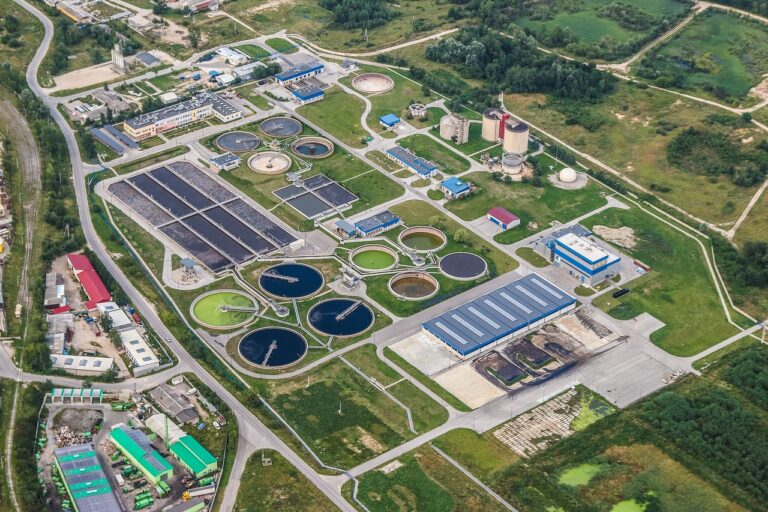
Wastewater treatment systems are advanced infrastructures designed to remove contaminants from domestic, industrial, and commercial wastewater before it is released...
Devamını OkuPROTECTION OF PERSONAL DATA
WEBSITE COOKIE POLICY
Your personal data; It is one of the leading principles of our Organization to protect the privacy of visitors to the website (www.adatech.com.tr) operated by ADATECH as the data controller. This Cookie Usage Policy (“Policy”) explains to all our website visitors and users which types of cookies are used and under what conditions.
Cookies are small text files stored on your device or network server by websites you visit on your computer or mobile device.
They are generally used to provide you with a personalized experience during your use of the website you visit, to improve the services offered and to improve your experience, and may contribute to ease of use while browsing a website. If you do not prefer the use of Cookies, you can delete or block Cookies in your browser settings. However, we would like to remind you that this may affect your use of our website. Unless you change your cookie settings in your browser, we will assume that you accept the use of cookies on this website.
1. WHAT KIND OF DATA IS PROCESSED IN COOKIES?
Cookies on websites, depending on their type, collect data about your browsing and usage preferences on the device you visit the site. This data includes information about the pages you access, the services and products you review, your preferred language option and other preferences.
2. WHAT is a solution and what are its intended uses?
Cookies are small text files that are stored on your device or network server through browsers by websites you visit. These small text files, which contain your preferred language and other settings on the site, help us remember your preferences the next time you visit the site and make improvements to our services to improve your experience on the site. Thus, you can have a better and personalized usage experience on your next visit.
The main purposes of using cookies on our Website are listed below:
3.TYPES OF COOKIES USED ON OUR WEBSITE
3.1. Oturum Çerezleri
Session cookies ensure that the website functions properly during your visit. They are used for purposes such as ensuring the security and continuity of our sites and you during your visit. Session cookies are temporary cookies, they are deleted when you close your browser and come to our site again, they are not permanent.
3.2. Persistent Cookies
These types of cookies are used to remember your preferences and are stored on your device via browsers. Persistent cookies remain stored even after you close your browser or restart your computer from which you visited our site. These cookies are kept in subfolders of your browser until they are deleted through your browser’s settings.
Some types of persistent cookies may be used to provide you with special suggestions, taking into account issues such as your purpose of using the Website.
Thanks to persistent cookies, if you visit our Website again with the same device, it is checked whether there is a cookie created by our Website on your device and if there is, it is understood that you have visited the site before and the content to be transmitted to you is determined accordingly and thus a better service is provided to you.
3.3. Mandatory/Technical Cookies
These cookies are essential for the website you visit to function properly. The purpose of such cookies is to provide necessary services by enabling the website to function. For example, it allows you to access secure parts of the website, to use its features, to navigate on it.
3.4. Analytical Cookies
They collect information about the way the website is used, the frequency and number of visits, and show how visitors navigate to the site. The purpose of using such cookies is to increase performance by improving the way the site functions and to determine the general trend direction. They do not contain data that could enable the identification of visitors. For example, they show the number of error messages displayed or the most visited pages.
3.5. Functional/Functional Cookies
It saves the choices made by the visitor within the site and remembers them on the next visit. The purpose of such cookies is to provide ease of use to visitors. For example, it prevents the site user from re-entering the user password on each page they visit.
3.6. Targeting/Advertising Cookies
They enable the measurement of the effectiveness of advertisements served to visitors and the calculation of the number of times the advertisements are viewed. The purpose of such cookies is to serve ads customized to the interests of visitors.
Likewise, they enable the detection of visitors’ interests specific to their browsing and the presentation of appropriate content. For example, it prevents the advertisement shown to the visitor from being shown again in a short time.
4. HOW TO MANAGE COOKIE PREFERENCES?
To change your preferences regarding the use of cookies or to block or delete cookies, simply change your browser settings.
Many browsers give you the option to accept or reject cookies, accept only certain types of cookies, or be alerted by the browser when a website requests to store cookies on your device so that you can control cookies.
It is also possible to delete cookies previously saved in your browser.
If you disable or refuse cookies, you may need to set some preferences manually, some features and services on the website may not function properly as we will not be able to recognize and associate your account. You can change the settings of your browser by clicking on the relevant link from the table below.
5. ENFORCEMENT OF WEBSITE PRIVACY POLICY
Website Privacy Policy …./…./…./…. . is dated. In case all or certain articles of the Policy are renewed, the effective date of the Policy will be updated. The Privacy Policy is published on the website of the Authority (www.adatech.com.tr) and made available to the relevant persons upon the request of the personal data owners.
ADATECH
Address: Esenyalı Neighborhood Yanyol Street Varyap Plaza No:61-148 Pendik / Istanbul
Telephone: +90 (216 ) 514 80 69
E-mail: info@adatech.com.tr
Web Address: www.adatech.com.tr