



Smart Monitoring and Control with Energy SCADA Systems
The global energy sector is rapidly evolving as digital technologies transform how power systems are monitored and managed. Power plants,...
Devamını Oku
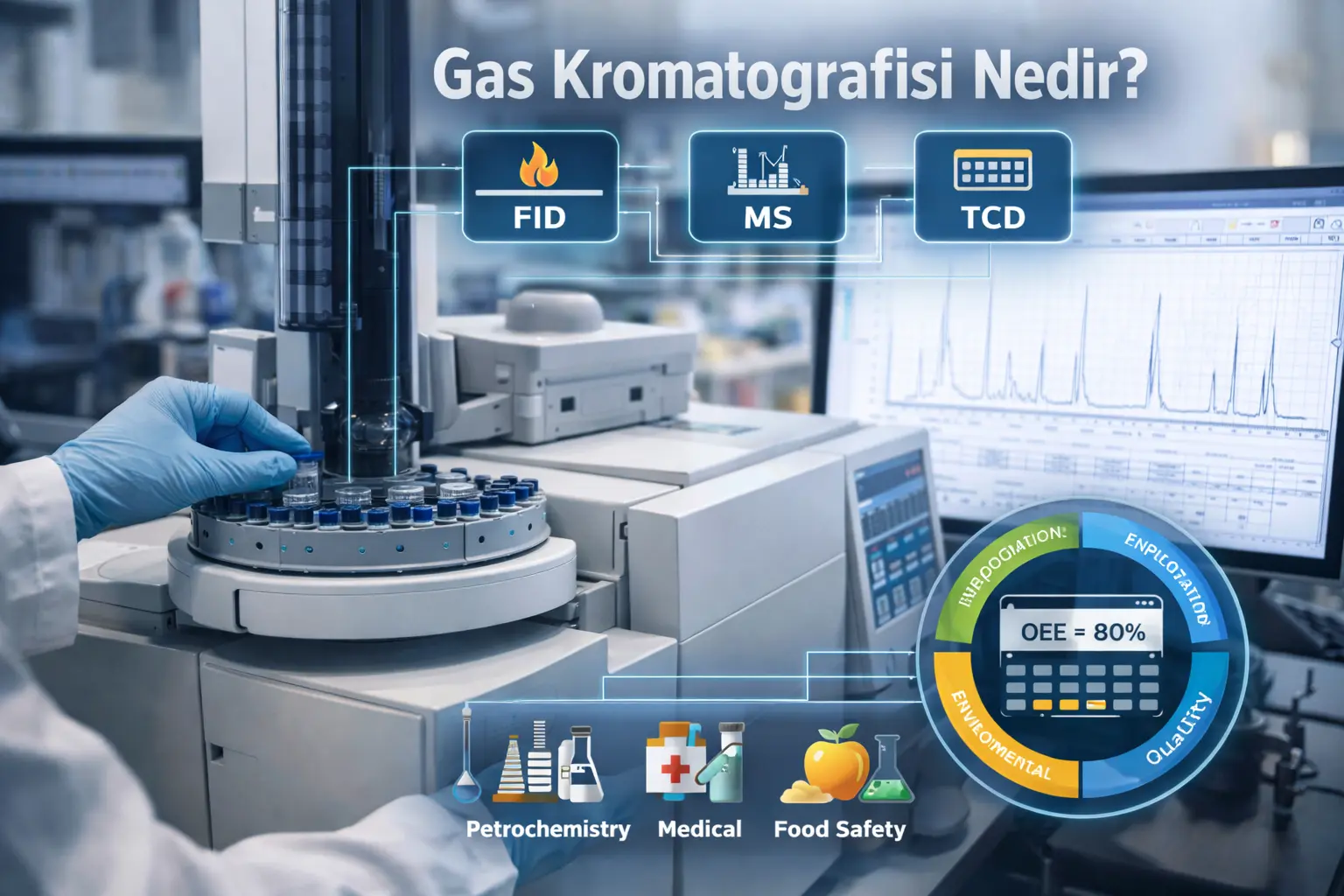
Gas chromatography is a powerful analytical technique used to separate, identify, and quantify volatile compounds within complex mixtures. Commonly applied in research laboratories and industrial settings, this method enables fast and highly accurate detection of substances, even at trace levels. Its ability to analyze complex chemical compositions makes it essential in fields such as pharmaceuticals, petrochemicals, environmental monitoring, and food safety.
The question what is gas chromatography encompasses more than just the technical process; it represents a cornerstone of modern analytical science. The efficiency of this technique lies in its key components—injector, column, carrier gas, and detectors—all working in harmony to deliver precise results. Different types of gas chromatography detectors allow users to tailor the system to specific analytical needs, enhancing sensitivity and selectivity. From identifying unknown compounds to assessing product purity, analyses performed with gas chromatography are vital in both quality control and research. Thanks to its versatility, applications of gas chromatography continue to expand across various industries worldwide.
To understand what is gas chromatography, it’s important to first consider its function in analytical chemistry. Gas chromatography (GC) is a separation technique used to analyze compounds that can be vaporized without decomposition. The sample is introduced into the system, carried by an inert gas through a column, and separated based on the interaction between the sample components and the stationary phase inside the column. Each compound exits the column at a different time, allowing for accurate identification and quantification.
Gas chromatography is widely recognized for its speed, precision, and sensitivity. It is a go-to method for analyzing mixtures containing volatile and semi-volatile organic compounds. GC is also valued for its ability to produce both qualitative and quantitative results, making it ideal for research, quality control, and regulatory compliance. By integrating advanced detectors, users can gain a deeper understanding of the sample composition, even in complex matrices.
Gas chromatography operates by injecting a vaporized sample into a stream of inert carrier gas, which transports it through a column packed with a stationary phase. As the sample travels, its components separate based on their chemical properties and interactions with the column. These components are then detected individually, allowing for accurate identification and quantification.
A typical gas chromatography system consists of several core components that work together to achieve precise separation and analysis. These include the injector system, carrier gas supply, column, oven, and detector. The injector introduces the sample into the system, where it is vaporized and mixed with the carrier gas. The carrier gas then transports the sample through the column, where separation of individual compounds occurs based on their physical and chemical properties.
The column, housed inside a temperature-controlled oven, plays a crucial role in the separation process. After passing through the column, the analytes are detected by specialized detectors that measure signal responses for each compound. The combination of these elements ensures a controlled and repeatable analysis process that delivers reliable results in various scientific and industrial applications.
In gas chromatography, the injector system is where the analysis begins. The sample is introduced into a heated injection port, instantly vaporized, and mixed with the carrier gas. This process ensures that the sample enters the column in a consistent and uniform manner. Proper injection is critical for accurate and repeatable results, especially in trace-level compound analysis.
In gas chromatography, the column is the core component where the separation of compounds occurs. There are two main types: packed columns and capillary (or open tubular) columns. Capillary columns offer higher resolution and are commonly used in modern GC systems, while packed columns are suitable for larger sample volumes. The column type directly impacts the efficiency and sensitivity of the analysis.
In gas chromatography, carrier gases are responsible for transporting the vaporized sample through the column. Common choices include helium, nitrogen, and hydrogen, each offering different advantages in terms of efficiency, speed, and safety. The choice of carrier gas affects the resolution and sensitivity of the analysis, making it a crucial factor in method development and optimization.
Gas chromatography detectors are essential components responsible for identifying and quantifying the individual compounds as they exit the column. These detectors generate signals based on the physical or chemical properties of the separated compounds. The intensity of the signal correlates with the concentration of each component, allowing for accurate quantitative analysis. The detector’s sensitivity and selectivity are critical to obtaining reliable results, especially in complex sample matrices.
There are several types of detectors available, each tailored to specific analytical needs. Commonly used options include flame ionization detectors (FID), thermal conductivity detectors (TCD), electron capture detectors (ECD), and mass spectrometers (MS). The choice depends on the target compounds and the level of detection required. Gas chromatography detectors significantly influence the performance and capabilities of any GC system.
The most widely used types of gas chromatography detectors include Flame Ionization Detector (FID), Thermal Conductivity Detector (TCD), Electron Capture Detector (ECD), and Mass Spectrometry (MS). Each serves a unique purpose—FID for hydrocarbons, TCD for general compounds, ECD for halogenated substances, and MS for detailed molecular identification—providing flexibility based on analytical needs
Analyses performed with gas chromatography are widely used to separate, identify, and quantify volatile and semi-volatile compounds in complex mixtures. This technique is essential in both qualitative and quantitative assessments, offering high-resolution results with excellent reproducibility. Whether examining environmental samples, food products, pharmaceuticals, or petrochemical substances, GC provides precise insights into the chemical composition of a sample.
This method is particularly useful when dealing with mixtures that contain multiple components that need to be separated before analysis. From detecting contaminants to verifying product purity and measuring active ingredients, analyses performed with gas chromatography are integral to research, quality control, and regulatory compliance across industries. Its adaptability and accuracy make it one of the most trusted tools in modern analytical science.
The applications of gas chromatography span a wide range of industries due to its ability to provide precise and reliable chemical analysis. In the petrochemical sector, it’s used to analyze hydrocarbon mixtures and monitor production processes. In the food industry, it helps identify flavors, preservatives, and potential contaminants. Environmental labs use it to detect pollutants in air, water, and soil, ensuring compliance with safety standards.
Pharmaceutical companies rely on GC for purity testing, active ingredient verification, and residual solvent analysis. It’s also widely used in forensic investigations to identify unknown substances in biological samples. The versatility and adaptability of applications of gas chromatography make it an indispensable technique in scientific research, industrial quality control, and regulatory enforcement.
Gas chromatography plays a critical role in the chemical and petrochemical industry by analyzing complex hydrocarbon mixtures, monitoring product purity, and optimizing refinery operations. It is commonly used to separate and identify components in fuels, lubricants, and raw materials. The technique ensures consistent product quality and supports process control in large-scale industrial applications.
Gas chromatography is widely used in the food industry to identify and quantify flavor compounds, additives, and potential contaminants. It helps manufacturers ensure product consistency, authenticity, and safety. From analyzing essential oils to detecting pesticide residues, GC offers a reliable method for maintaining high quality standards in food production and flavor formulation.
Gas chromatography is a valuable tool in environmental analysis for detecting pollutants in air, water, and soil samples. It enables the accurate measurement of volatile organic compounds (VOCs), pesticides, and industrial chemicals. Regulatory agencies and environmental laboratories rely on GC to monitor contamination levels and support environmental protection and public health initiatives.
Gas chromatography is essential in the pharmaceutical and biotechnology industries for analyzing active pharmaceutical ingredients (APIs), residual solvents, and formulation stability. It ensures compliance with regulatory standards by delivering accurate and reproducible data. GC also supports biotechnological research by helping identify metabolic by-products and monitoring fermentation processes with high precision.
Gas chromatography is a key technique in forensic and toxicological investigations, used to detect drugs, poisons, and alcohol in biological samples such as blood, urine, and tissues. Its high sensitivity allows for the identification of trace-level substances, making it vital for criminal cases, postmortem examinations, and workplace drug testing.

The global energy sector is rapidly evolving as digital technologies transform how power systems are monitored and managed. Power plants,...
Devamını Oku
SCADA (Supervisory Control and Data Acquisition) is a comprehensive system designed to monitor, control, and manage industrial processes in real...
Devamını Oku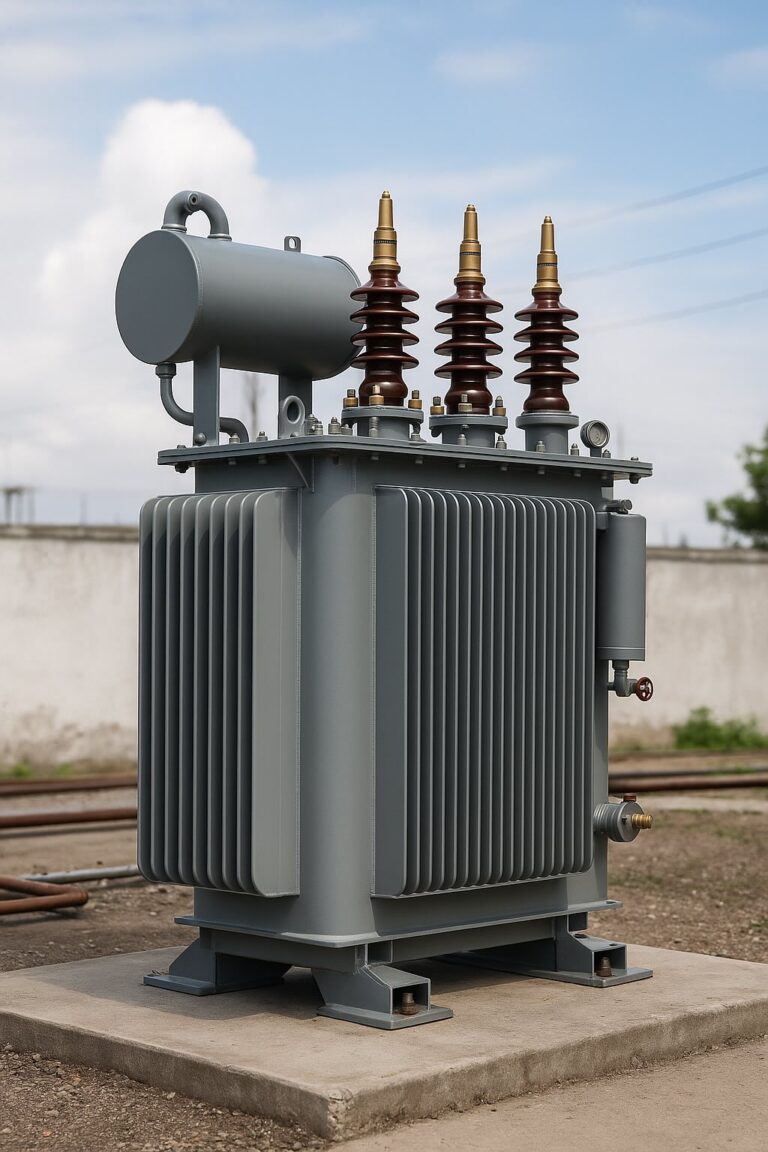
An oil-filled transformer is a type of electrical transformer that uses insulating oil as both a cooling and insulating medium....
Devamını OkuPROTECTION OF PERSONAL DATA
WEBSITE COOKIE POLICY
Your personal data; It is one of the leading principles of our Organization to protect the privacy of visitors to the website (www.adatech.com.tr) operated by ADATECH as the data controller. This Cookie Usage Policy (“Policy”) explains to all our website visitors and users which types of cookies are used and under what conditions.
Cookies are small text files stored on your device or network server by websites you visit on your computer or mobile device.
They are generally used to provide you with a personalized experience during your use of the website you visit, to improve the services offered and to improve your experience, and may contribute to ease of use while browsing a website. If you do not prefer the use of Cookies, you can delete or block Cookies in your browser settings. However, we would like to remind you that this may affect your use of our website. Unless you change your cookie settings in your browser, we will assume that you accept the use of cookies on this website.
1. WHAT KIND OF DATA IS PROCESSED IN COOKIES?
Cookies on websites, depending on their type, collect data about your browsing and usage preferences on the device you visit the site. This data includes information about the pages you access, the services and products you review, your preferred language option and other preferences.
2. WHAT is a solution and what are its intended uses?
Cookies are small text files that are stored on your device or network server through browsers by websites you visit. These small text files, which contain your preferred language and other settings on the site, help us remember your preferences the next time you visit the site and make improvements to our services to improve your experience on the site. Thus, you can have a better and personalized usage experience on your next visit.
The main purposes of using cookies on our Website are listed below:
3.TYPES OF COOKIES USED ON OUR WEBSITE
3.1. Oturum Çerezleri
Session cookies ensure that the website functions properly during your visit. They are used for purposes such as ensuring the security and continuity of our sites and you during your visit. Session cookies are temporary cookies, they are deleted when you close your browser and come to our site again, they are not permanent.
3.2. Persistent Cookies
These types of cookies are used to remember your preferences and are stored on your device via browsers. Persistent cookies remain stored even after you close your browser or restart your computer from which you visited our site. These cookies are kept in subfolders of your browser until they are deleted through your browser’s settings.
Some types of persistent cookies may be used to provide you with special suggestions, taking into account issues such as your purpose of using the Website.
Thanks to persistent cookies, if you visit our Website again with the same device, it is checked whether there is a cookie created by our Website on your device and if there is, it is understood that you have visited the site before and the content to be transmitted to you is determined accordingly and thus a better service is provided to you.
3.3. Mandatory/Technical Cookies
These cookies are essential for the website you visit to function properly. The purpose of such cookies is to provide necessary services by enabling the website to function. For example, it allows you to access secure parts of the website, to use its features, to navigate on it.
3.4. Analytical Cookies
They collect information about the way the website is used, the frequency and number of visits, and show how visitors navigate to the site. The purpose of using such cookies is to increase performance by improving the way the site functions and to determine the general trend direction. They do not contain data that could enable the identification of visitors. For example, they show the number of error messages displayed or the most visited pages.
3.5. Functional/Functional Cookies
It saves the choices made by the visitor within the site and remembers them on the next visit. The purpose of such cookies is to provide ease of use to visitors. For example, it prevents the site user from re-entering the user password on each page they visit.
3.6. Targeting/Advertising Cookies
They enable the measurement of the effectiveness of advertisements served to visitors and the calculation of the number of times the advertisements are viewed. The purpose of such cookies is to serve ads customized to the interests of visitors.
Likewise, they enable the detection of visitors’ interests specific to their browsing and the presentation of appropriate content. For example, it prevents the advertisement shown to the visitor from being shown again in a short time.
4. HOW TO MANAGE COOKIE PREFERENCES?
To change your preferences regarding the use of cookies or to block or delete cookies, simply change your browser settings.
Many browsers give you the option to accept or reject cookies, accept only certain types of cookies, or be alerted by the browser when a website requests to store cookies on your device so that you can control cookies.
It is also possible to delete cookies previously saved in your browser.
If you disable or refuse cookies, you may need to set some preferences manually, some features and services on the website may not function properly as we will not be able to recognize and associate your account. You can change the settings of your browser by clicking on the relevant link from the table below.
5. ENFORCEMENT OF WEBSITE PRIVACY POLICY
Website Privacy Policy …./…./…./…. . is dated. In case all or certain articles of the Policy are renewed, the effective date of the Policy will be updated. The Privacy Policy is published on the website of the Authority (www.adatech.com.tr) and made available to the relevant persons upon the request of the personal data owners.
ADATECH
Address: Esenyalı Neighborhood Yanyol Street Varyap Plaza No:61-148 Pendik / Istanbul
Telephone: +90 (216 ) 514 80 69
E-mail: info@adatech.com.tr
Web Address: www.adatech.com.tr