



What is Sustainable Energy and What are Clean Energy Sources?
Sustainable energy and renewable energy are two crucial concepts that allow us to meet our energy needs in an environmentally...
Devamını Oku
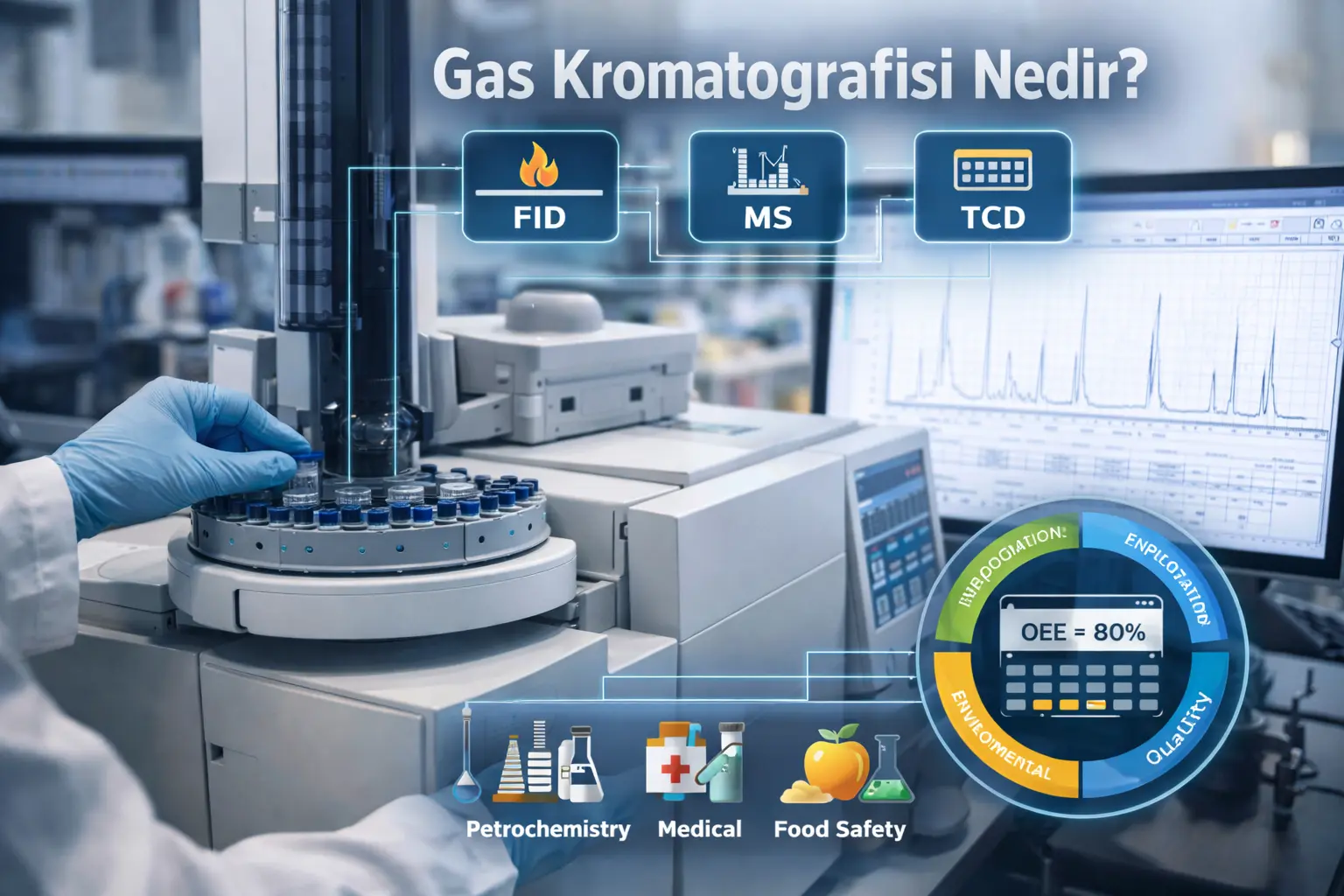
Gas chromatography is a powerful analytical technique used to separate, identify, and quantify volatile compounds within complex mixtures. Commonly applied in research laboratories and industrial settings, this method enables fast and highly accurate detection of substances, even at trace levels. Its ability to analyze complex chemical compositions makes it essential in fields such as pharmaceuticals, petrochemicals, environmental monitoring, and food safety.
The question what is gas chromatography encompasses more than just the technical process; it represents a cornerstone of modern analytical science. The efficiency of this technique lies in its key components—injector, column, carrier gas, and detectors—all working in harmony to deliver precise results. Different types of gas chromatography detectors allow users to tailor the system to specific analytical needs, enhancing sensitivity and selectivity. From identifying unknown compounds to assessing product purity, analyses performed with gas chromatography are vital in both quality control and research. Thanks to its versatility, applications of gas chromatography continue to expand across various industries worldwide.
To understand what is gas chromatography, it’s important to first consider its function in analytical chemistry. Gas chromatography (GC) is a separation technique used to analyze compounds that can be vaporized without decomposition. The sample is introduced into the system, carried by an inert gas through a column, and separated based on the interaction between the sample components and the stationary phase inside the column. Each compound exits the column at a different time, allowing for accurate identification and quantification.
Gas chromatography is widely recognized for its speed, precision, and sensitivity. It is a go-to method for analyzing mixtures containing volatile and semi-volatile organic compounds. GC is also valued for its ability to produce both qualitative and quantitative results, making it ideal for research, quality control, and regulatory compliance. By integrating advanced detectors, users can gain a deeper understanding of the sample composition, even in complex matrices.
Gas chromatography operates by injecting a vaporized sample into a stream of inert carrier gas, which transports it through a column packed with a stationary phase. As the sample travels, its components separate based on their chemical properties and interactions with the column. These components are then detected individually, allowing for accurate identification and quantification.
A typical gas chromatography system consists of several core components that work together to achieve precise separation and analysis. These include the injector system, carrier gas supply, column, oven, and detector. The injector introduces the sample into the system, where it is vaporized and mixed with the carrier gas. The carrier gas then transports the sample through the column, where separation of individual compounds occurs based on their physical and chemical properties.
The column, housed inside a temperature-controlled oven, plays a crucial role in the separation process. After passing through the column, the analytes are detected by specialized detectors that measure signal responses for each compound. The combination of these elements ensures a controlled and repeatable analysis process that delivers reliable results in various scientific and industrial applications.
In gas chromatography, the injector system is where the analysis begins. The sample is introduced into a heated injection port, instantly vaporized, and mixed with the carrier gas. This process ensures that the sample enters the column in a consistent and uniform manner. Proper injection is critical for accurate and repeatable results, especially in trace-level compound analysis.
In gas chromatography, the column is the core component where the separation of compounds occurs. There are two main types: packed columns and capillary (or open tubular) columns. Capillary columns offer higher resolution and are commonly used in modern GC systems, while packed columns are suitable for larger sample volumes. The column type directly impacts the efficiency and sensitivity of the analysis.
In gas chromatography, carrier gases are responsible for transporting the vaporized sample through the column. Common choices include helium, nitrogen, and hydrogen, each offering different advantages in terms of efficiency, speed, and safety. The choice of carrier gas affects the resolution and sensitivity of the analysis, making it a crucial factor in method development and optimization.
Gas chromatography detectors are essential components responsible for identifying and quantifying the individual compounds as they exit the column. These detectors generate signals based on the physical or chemical properties of the separated compounds. The intensity of the signal correlates with the concentration of each component, allowing for accurate quantitative analysis. The detector’s sensitivity and selectivity are critical to obtaining reliable results, especially in complex sample matrices.
There are several types of detectors available, each tailored to specific analytical needs. Commonly used options include flame ionization detectors (FID), thermal conductivity detectors (TCD), electron capture detectors (ECD), and mass spectrometers (MS). The choice depends on the target compounds and the level of detection required. Gas chromatography detectors significantly influence the performance and capabilities of any GC system.
The most widely used types of gas chromatography detectors include Flame Ionization Detector (FID), Thermal Conductivity Detector (TCD), Electron Capture Detector (ECD), and Mass Spectrometry (MS). Each serves a unique purpose—FID for hydrocarbons, TCD for general compounds, ECD for halogenated substances, and MS for detailed molecular identification—providing flexibility based on analytical needs
Analyses performed with gas chromatography are widely used to separate, identify, and quantify volatile and semi-volatile compounds in complex mixtures. This technique is essential in both qualitative and quantitative assessments, offering high-resolution results with excellent reproducibility. Whether examining environmental samples, food products, pharmaceuticals, or petrochemical substances, GC provides precise insights into the chemical composition of a sample.
This method is particularly useful when dealing with mixtures that contain multiple components that need to be separated before analysis. From detecting contaminants to verifying product purity and measuring active ingredients, analyses performed with gas chromatography are integral to research, quality control, and regulatory compliance across industries. Its adaptability and accuracy make it one of the most trusted tools in modern analytical science.
The applications of gas chromatography span a wide range of industries due to its ability to provide precise and reliable chemical analysis. In the petrochemical sector, it’s used to analyze hydrocarbon mixtures and monitor production processes. In the food industry, it helps identify flavors, preservatives, and potential contaminants. Environmental labs use it to detect pollutants in air, water, and soil, ensuring compliance with safety standards.
Pharmaceutical companies rely on GC for purity testing, active ingredient verification, and residual solvent analysis. It’s also widely used in forensic investigations to identify unknown substances in biological samples. The versatility and adaptability of applications of gas chromatography make it an indispensable technique in scientific research, industrial quality control, and regulatory enforcement.
Gas chromatography plays a critical role in the chemical and petrochemical industry by analyzing complex hydrocarbon mixtures, monitoring product purity, and optimizing refinery operations. It is commonly used to separate and identify components in fuels, lubricants, and raw materials. The technique ensures consistent product quality and supports process control in large-scale industrial applications.
Gas chromatography is widely used in the food industry to identify and quantify flavor compounds, additives, and potential contaminants. It helps manufacturers ensure product consistency, authenticity, and safety. From analyzing essential oils to detecting pesticide residues, GC offers a reliable method for maintaining high quality standards in food production and flavor formulation.
Gas chromatography is a valuable tool in environmental analysis for detecting pollutants in air, water, and soil samples. It enables the accurate measurement of volatile organic compounds (VOCs), pesticides, and industrial chemicals. Regulatory agencies and environmental laboratories rely on GC to monitor contamination levels and support environmental protection and public health initiatives.
Gas chromatography is essential in the pharmaceutical and biotechnology industries for analyzing active pharmaceutical ingredients (APIs), residual solvents, and formulation stability. It ensures compliance with regulatory standards by delivering accurate and reproducible data. GC also supports biotechnological research by helping identify metabolic by-products and monitoring fermentation processes with high precision.
Gas chromatography is a key technique in forensic and toxicological investigations, used to detect drugs, poisons, and alcohol in biological samples such as blood, urine, and tissues. Its high sensitivity allows for the identification of trace-level substances, making it vital for criminal cases, postmortem examinations, and workplace drug testing.

Sustainable energy and renewable energy are two crucial concepts that allow us to meet our energy needs in an environmentally...
Devamını Oku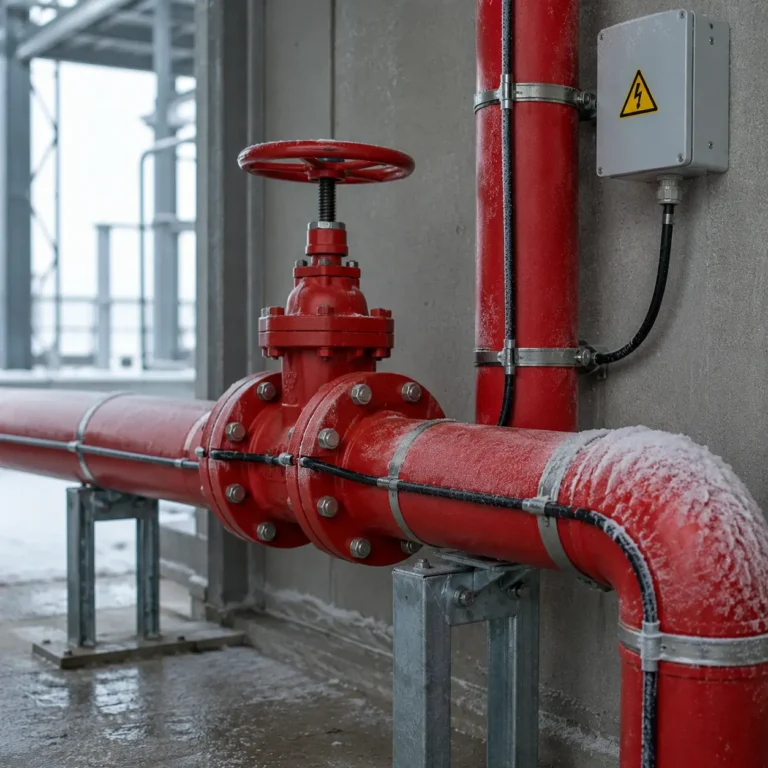
Fire protection lines are among the most critical safety infrastructures in any facility, designed to respond instantly in emergency situations....
Devamını Oku
In the era of rapid technological advancement, Industry 4.0 represents the next stage of industrial transformation, integrating smart technologies, automation,...
Devamını Oku