



Why Is Heat Tracing Necessary at Valves and Flange Points?
In industrial piping systems, ensuring process continuity depends not only on protecting straight pipeline sections but also on securing critical...
Devamını Oku
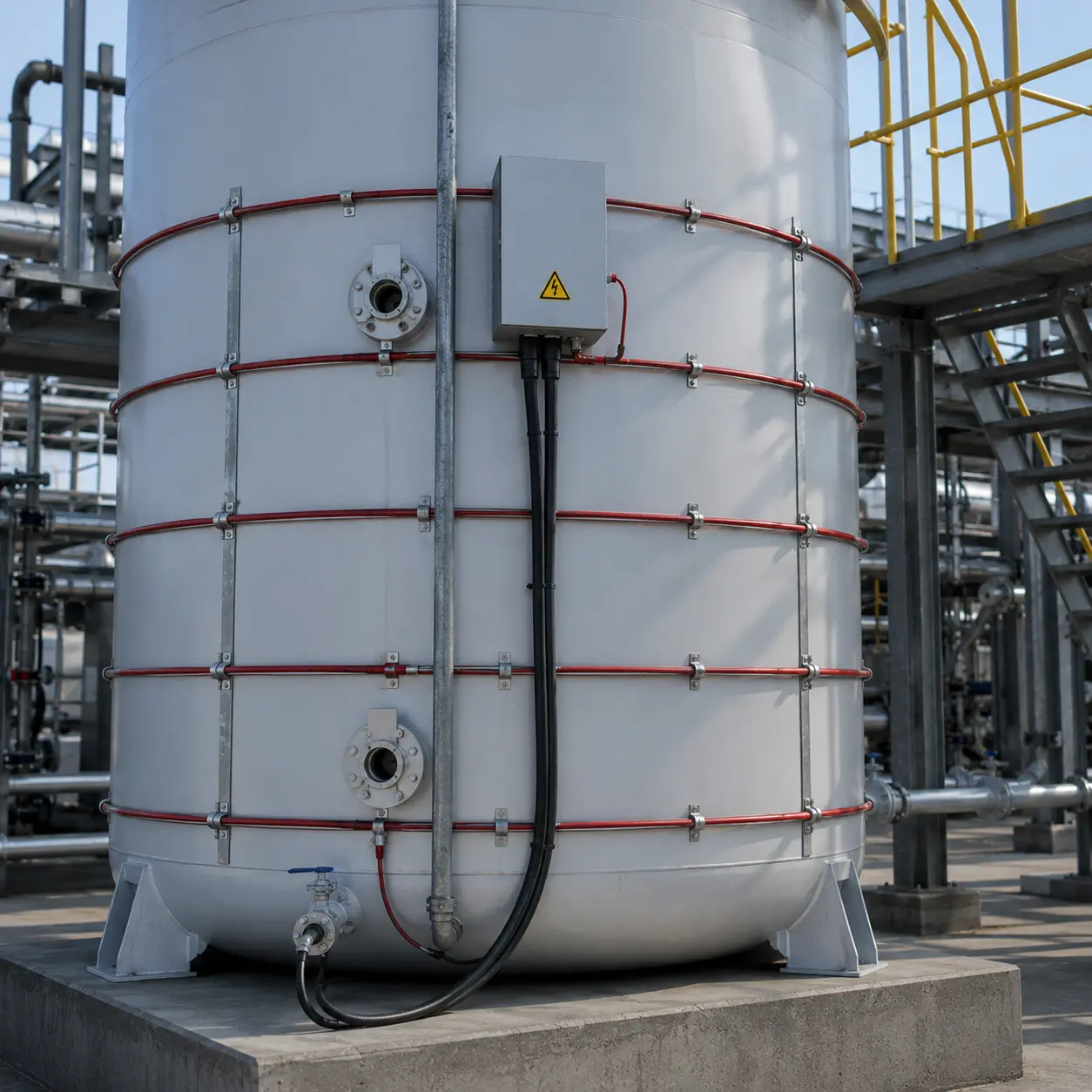
Heat tracing is a critical engineering solution used in tank heating applications to maintain product temperature, ensure flowability, and protect process integrity. Unlike standard pipeline tracing, tank heating requires a more comprehensive approach due to larger surface areas, varying heat loss zones, and the need for uniform temperature distribution. In industrial environments, especially in chemical, petrochemical, and energy sectors, improper temperature control can lead to viscosity changes, crystallization, or even complete solidification of stored fluids.
To fully understand the system, it is essential to explore what is heat tracing? in detail, as it forms the foundation of this application. Heat tracing involves the use of electrical heating cables applied to surfaces to compensate for heat loss and maintain desired temperatures. However, in tank applications, this system is never used alone. Instead, it works as part of an integrated solution that includes sensors, control panels, and insulation layers. Modern heat tracing systems are designed to respond dynamically to temperature changes, ensuring both energy efficiency and operational reliability. With engineering approaches similar to those adopted by Adatech, each tank system is designed specifically according to fluid characteristics, environmental conditions, and process requirements, making heat tracing a strategic component rather than a simple add-on.
Heat tracing is widely preferred in tank heating applications because it provides controlled, efficient, and reliable temperature maintenance across large and complex surfaces. Unlike conventional heating methods, which may create uneven temperature zones, heat tracing delivers consistent heat distribution directly where it is needed. This is particularly important in tanks where fluid properties must remain stable to ensure smooth operation, safe storage, and uninterrupted process flow. The ability to precisely control temperature makes heat tracing an ideal solution for industries handling sensitive or temperature-dependent materials.
Another key advantage is its adaptability to different tank geometries and process requirements. Heat tracing systems can be engineered specifically for each application, taking into account fluid type, ambient conditions, and operational demands. When integrated with sensors and control systems, it enables real-time monitoring and automatic adjustments, significantly improving energy efficiency. Additionally, when combined with proper insulation, it minimizes heat loss and reduces operational costs. This holistic approach distinguishes tank heat tracing from standard pipeline applications, where heat loss dynamics and surface exposure differ significantly.
In tank storage, maintaining the physical and chemical properties of fluids is essential for both process efficiency and product quality. Many industrial fluids, such as chemicals, oils, and polymers, are highly sensitive to temperature changes. When temperatures drop below critical levels, these fluids can become more viscous, separate, or even solidify. Heat tracing ensures that the fluid remains within its optimal temperature range, preserving its intended characteristics and preventing operational disruptions.
A stable process temperature is crucial in maintaining consistent production quality and avoiding process variability. Heat tracing systems are designed to keep tank temperatures within a defined range, preventing fluctuations caused by environmental conditions. Through the use of temperature sensors and automated control panels, the system continuously adjusts heat output to maintain stability. This level of precision ensures that processes remain efficient, predictable, and compliant with operational standards.
In tank heating systems, understanding where heat loss occurs is essential for designing an efficient and reliable heat tracing solution. Unlike pipelines, tanks have larger surface areas and more complex geometries, which lead to uneven heat distribution if not properly engineered. Heat loss is not uniform across the tank; instead, it tends to concentrate in specific regions due to environmental exposure, structural design, and material differences. Identifying these critical zones allows engineers to optimize cable placement, insulation strategy, and control mechanisms.
Accurate heat loss analysis directly impacts both system performance and energy efficiency. If these high-loss areas are not properly addressed, the system may struggle to maintain the required temperature, leading to process instability or increased energy consumption. In well-designed heat tracing systems, these zones are carefully evaluated, and additional heating capacity or localized solutions are applied where necessary. This approach ensures consistent temperature maintenance across the entire tank, which is especially important for sensitive industrial processes.
The tank body represents the largest exposed surface area and is therefore the primary source of heat loss. Environmental factors such as wind, ambient temperature, and humidity significantly influence heat dissipation from the tank walls. Without proper heat tracing and insulation, this can result in uneven temperature profiles within the tank, particularly in outdoor installations. Maintaining uniform heat distribution across the tank body is critical to prevent localized cooling and product inconsistency.
The bottom section of the tank is another critical area, especially in ground-mounted systems. Heat loss can occur through conduction to the foundation, causing lower temperatures in the base region. This can lead to sedimentation or thickening of fluids at the bottom. Additionally, outlet lines are highly vulnerable to heat loss due to fluid movement and exposure. If not properly heated, these lines can become bottlenecks in the process, restricting flow and affecting overall system performance.
Valves, nozzles, and connection points are among the most challenging areas to protect against heat loss. These components often have complex geometries and are difficult to insulate effectively, making them prone to rapid temperature drops. Since they are also critical control and transfer points within the system, any temperature-related issue can directly impact process reliability.
In many cases, localized heat tracing solutions are required for these components to ensure adequate temperature maintenance. Failure to properly heat these نقاط can result in fluid solidification, blockages, or mechanical stress on equipment. For this reason, engineers often incorporate additional sensors and targeted heating strategies in these areas to maintain operational stability and minimize maintenance risks.
Integrating heat tracing into a tank system requires a holistic engineering approach that goes far beyond simply installing heating cables. Unlike pipeline systems, tank applications involve complex geometries, variable heat loss zones, and larger thermal masses. Therefore, integration must consider cable layout, thermal calculations, control strategies, and insulation design as a unified system. Each component must work in coordination to ensure that the desired temperature is maintained consistently across the entire tank surface.
A properly integrated system enhances both operational reliability and energy efficiency. Poor integration, on the other hand, can lead to uneven heating, excessive power consumption, and process instability. Modern heat tracing systems are designed with automation in mind, incorporating sensors and control panels that continuously monitor and adjust performance. This ensures that the system responds dynamically to environmental changes and process demands, making it suitable for critical industrial applications where precision is essential.
The placement of heat tracing cables on a tank surface is one of the most critical factors in achieving uniform heat distribution. Cables are typically installed in spiral, vertical, or zoned configurations depending on the tank geometry, fluid characteristics, and required heat output. The goal is to eliminate cold spots while avoiding overheating in localized areas, which can negatively impact both energy efficiency and product quality.
Improper cable spacing or layout can result in temperature gradients across the tank surface. This is particularly problematic in large tanks where heat must be distributed evenly over a wide area. Engineering calculations are used to determine optimal cable density and routing, ensuring that all regions of the tank receive sufficient thermal input. This distinguishes tank applications from standard pipe tracing, where heat distribution is more linear and predictable.
Control systems and temperature sensors are essential components of any heat tracing integration. Sensors are strategically placed on the tank surface and, in some cases, within the fluid itself to provide accurate temperature readings. These measurements are continuously transmitted to control panels, which regulate the power supplied to the heating cables.
This closed-loop control mechanism allows the system to maintain precise temperature levels while minimizing energy consumption. Advanced systems can also include alarm functions, remote monitoring, and integration with plant automation systems. This level of control ensures that the tank heating system operates safely, efficiently, and in line with process requirements, which is especially important in B2B industrial environments.
Heat tracing systems are most effective when used in combination with proper thermal insulation. While heat tracing provides the necessary heat input, insulation minimizes heat loss to the environment, creating a balanced and energy-efficient system. Without insulation, even the most advanced heat tracing setup would struggle to maintain stable temperatures, especially in harsh outdoor conditions.
The interaction between heat tracing and insulation must be carefully engineered. Insulation thickness, material type, and installation quality all influence system performance. When designed correctly, this combination significantly reduces energy consumption while ensuring consistent temperature control. This integrated approach highlights the importance of treating tank heating as a complete system rather than a standalone solution.
Heat tracing becomes especially critical in tank applications where temperature directly affects product stability, flowability, and process safety. While many tanks benefit from basic thermal protection, certain industries and fluid types require precise and continuous temperature control to maintain operational integrity. In such cases, heat tracing is not optional but a core component of the system design. These applications typically involve fluids that are sensitive to temperature fluctuations, have high viscosity, or pose risks if solidification or phase changes occur.
The importance of heat tracing in these scenarios is closely linked to process requirements and environmental conditions. Tanks exposed to cold climates, long storage durations, or intermittent operation are particularly vulnerable to heat loss. Therefore, selecting and designing the right system depends heavily on understanding the fluid’s behavior and the operational context. This is where advanced heat tracing systems provide significant value, offering tailored solutions that ensure consistent performance, safety, and efficiency across demanding industrial environments.
Chemical storage tanks often contain substances that must remain within strict temperature ranges to prevent degradation, crystallization, or hazardous reactions. Even minor temperature deviations can alter the chemical composition or create safety risks such as pressure build-up or phase separation. Heat tracing systems help maintain a stable thermal environment, ensuring that chemicals remain safe to store and ready for use.
In addition, many chemicals have specific handling requirements that demand continuous monitoring and control. By integrating sensors and automated controls, heat tracing systems provide precise temperature regulation, reducing the risk of human error and ensuring compliance with industry standards. This makes them indispensable in chemical processing and storage facilities.
Fuel, oil, and other viscous fluids are highly sensitive to temperature changes, particularly in colder environments. As temperatures drop, these fluids can thicken significantly, making pumping and transfer operations difficult or even impossible. Heat tracing ensures that these substances remain at a temperature where they can flow freely, preventing blockages and operational delays.
In large storage tanks, uneven heating can also lead to stratification, where different layers of fluid have varying viscosities. This can complicate downstream processes and reduce efficiency. Heat tracing systems address this issue by maintaining uniform temperatures throughout the tank, ensuring consistent fluid behavior and reliable system performance.
Process and holding tanks play a vital role in maintaining production continuity, especially in industries where materials are stored temporarily before further processing. Temperature fluctuations in these tanks can disrupt the entire production line, leading to inconsistencies in product quality and increased downtime. Heat tracing systems provide the necessary thermal stability to keep processes running smoothly.
These tanks often operate under dynamic conditions, with varying fill levels and changing environmental exposure. As a result, heat tracing must be carefully designed to adapt to these variations. By combining heating cables with sensors and control systems, operators can ensure that temperature remains within the required range at all times, supporting both efficiency and product consistency.
Proper system design in tank heating applications is essential to ensure consistent performance, operational safety, and long-term efficiency. Unlike simpler heating setups, tank systems require a precise balance between heat input, heat loss, and control mechanisms. A poorly designed heat tracing system can result in uneven temperature distribution, leading to cold spots, overheating, or excessive energy consumption. These issues not only affect product quality but can also cause mechanical stress on equipment and increase maintenance frequency.
A well-engineered system considers all variables, including tank geometry, ambient conditions, insulation quality, and fluid characteristics. Each of these factors directly influences how heat is generated, distributed, and retained within the system. This is why understanding what is heat tracing? is fundamental—it is not just about applying heat but about managing thermal behavior across a complex structure. In tank applications, this complexity is significantly higher than in pipelines, making design accuracy even more critical.
Another key aspect of proper system design is integration. Heat tracing must function in harmony with sensors, control panels, and insulation systems. Without this integration, the system cannot respond effectively to temperature changes or process demands. Advanced heat tracing systems use automated controls and real-time monitoring to adjust heat output dynamically, ensuring optimal performance under varying conditions. This reduces energy waste and enhances process reliability.
Incorrect design assumptions can lead to underpowered or overpowered systems. An underpowered system fails to maintain required temperatures, risking product solidification or process interruptions. Conversely, an overpowered system increases operational costs and may damage sensitive materials. Therefore, accurate heat loss calculations and correct cable selection are crucial steps in the design phase.
Additionally, proper system design improves maintainability and operational visibility. When systems are designed with clear zoning, accessible components, and strategic sensor placement, troubleshooting becomes faster and more efficient. This minimizes downtime and ensures that maintenance teams can respond quickly to any issues that arise.
Safety is another critical reason why system design must be handled with precision. In environments where flammable or hazardous materials are stored, improperly designed heating systems can pose serious risks. Compliance with international safety standards and proper equipment certification are non-negotiable elements of a well-designed system.
Energy efficiency also depends heavily on design quality. Systems that are optimized with the right balance of insulation and controlled heating can significantly reduce energy consumption. This not only lowers operational costs but also supports sustainability goals, which are increasingly important in industrial operations.
Finally, tank heating systems must be designed with a multidisciplinary perspective. Mechanical, electrical, and automation engineering must work together to create a cohesive solution. This integrated approach ensures that all components function seamlessly, delivering reliable and efficient performance over the system’s lifecycle.
In tank heating applications, success is not determined solely by the components used but by how well they are designed and integrated. A properly designed heat tracing system ensures stability, efficiency, and safety—making it a critical investment for any industrial operation.
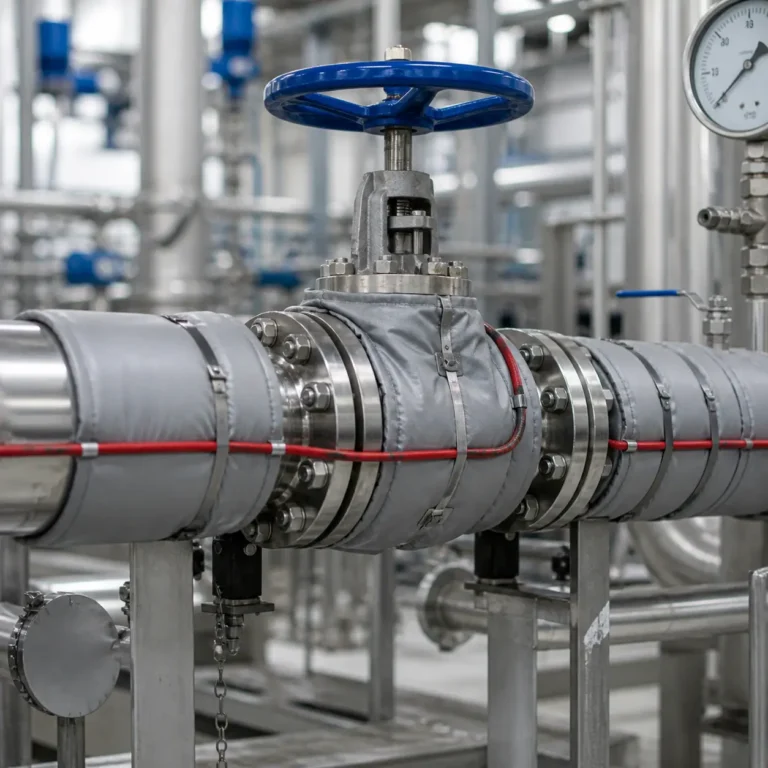
In industrial piping systems, ensuring process continuity depends not only on protecting straight pipeline sections but also on securing critical...
Devamını Oku
Industrial automation refers to the use of control systems, such as computers or robots, and advanced technologies to manage different...
Devamını Oku
In modern industrial automation systems, reliable data communication between field devices and control platforms is essential for efficient operations. Sensors,...
Devamını Oku