



What is a Pig Station? What Does It Do?
In the oil, gas, and industrial pipeline sectors, a pig station is a crucial infrastructure component used to ensure the...
Devamını Oku
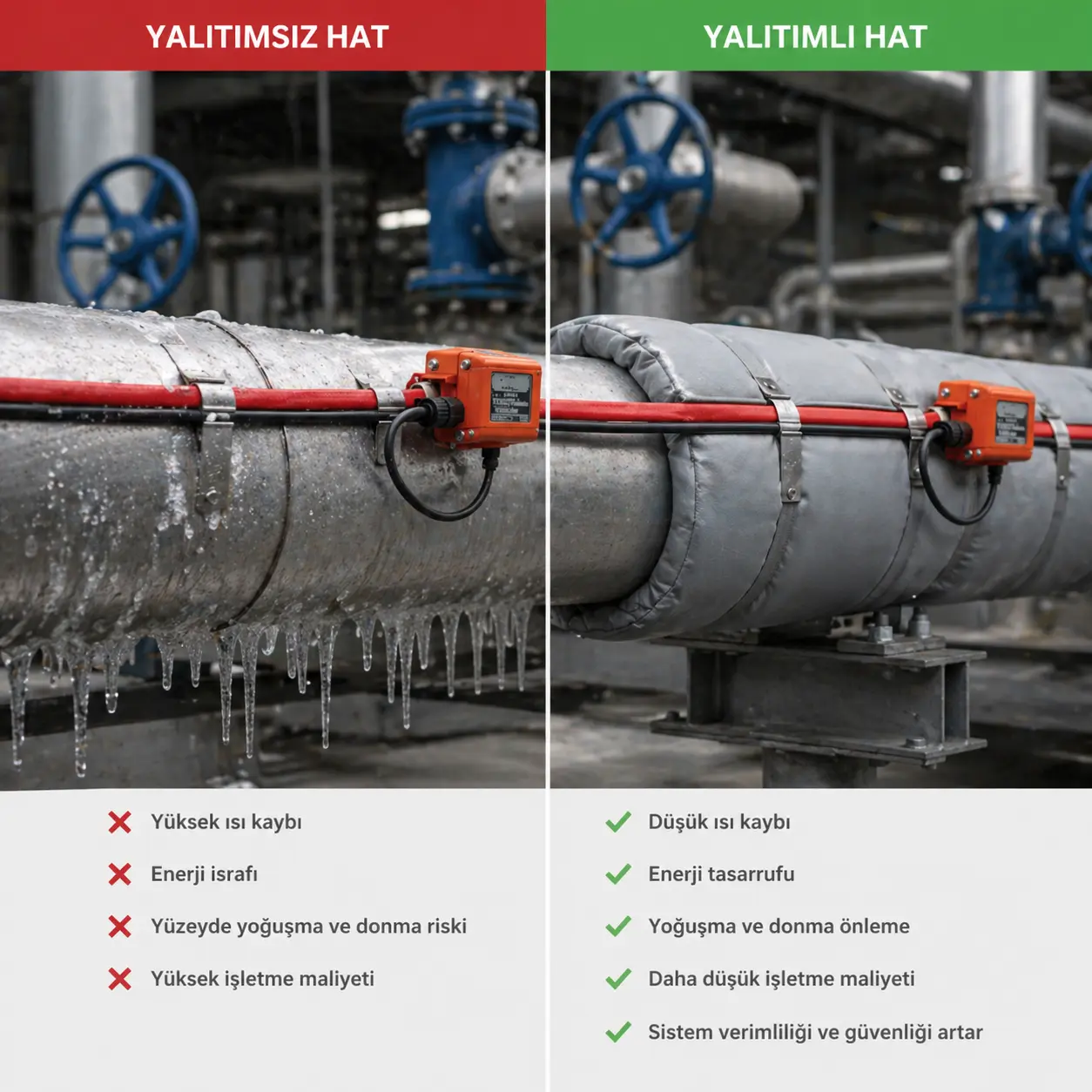
In industrial environments where temperature control is essential, heat tracing systems play a crucial role in maintaining process stability and operational safety. To fully understand this, it is helpful to explore What is heat tracing?, as it provides the foundation for how these systems function in real-world applications. Heat tracing is designed to maintain or raise the temperature of pipes, tanks, and equipment, but its effectiveness is highly dependent on one key factor: thermal insulation. Without proper insulation, the heat generated by the system is rapidly lost to the surrounding environment, significantly reducing efficiency.
Thermal insulation acts as a protective barrier that minimizes heat loss and ensures that the system operates within its intended temperature range. In Heat tracing systems, insulation is not simply an accessory but a core component that directly impacts performance, energy consumption, and long-term reliability. When insulation is properly designed and applied, it allows the system to maintain consistent temperatures with minimal energy input. This leads to improved process control, reduced operational costs, and enhanced system longevity.
From a practical standpoint, field applications consistently demonstrate that systems with high-quality insulation perform more reliably and require less maintenance. In contrast, poorly insulated systems often struggle to maintain target temperatures, leading to increased energy usage and potential process disruptions. This is especially critical in industries such as oil and gas, chemical processing, and manufacturing, where even minor temperature deviations can have significant consequences.
Moreover, insulation plays a vital role in energy efficiency, which has become a major concern for modern industries aiming to reduce their environmental footprint. By minimizing heat loss, well-designed insulation systems help lower overall energy demand and contribute to more sustainable operations. This not only reduces costs but also aligns with global efforts toward energy conservation and emission reduction.
Adatech approaches engineering projects with a focus on innovation, quality, and sustainability, ensuring that every component—including insulation—is optimized for maximum performance. In heat tracing applications, this approach highlights the importance of integrating insulation into the system design from the very beginning. When insulation is treated as a strategic element rather than an afterthought, the result is a more efficient, reliable, and cost-effective system.
In heat tracing systems, insulation is not just a complementary layer—it is a fundamental component that directly determines how effectively the system performs. The primary function of a heat tracing system is to maintain a specific temperature along pipes or equipment, but without proper insulation, the generated heat quickly dissipates into the environment. This leads to continuous energy loss and forces the system to work harder to compensate. As a result, energy consumption increases while overall efficiency declines. Proper insulation ensures that the heat produced is retained within the system, allowing it to operate at optimal performance with minimal energy input. This becomes especially important in long pipeline systems and outdoor installations where environmental exposure significantly accelerates heat loss.
Another critical aspect of insulation is its role in ensuring process reliability and operational stability. Inadequate insulation can cause temperature fluctuations, which may lead to fluid viscosity changes, freezing, or even process shutdowns. By maintaining a stable thermal environment, insulation helps prevent these risks and supports uninterrupted operations. Additionally, it reduces the load on heat tracing cables, allowing them to function under less stress and extending their service life. From an energy efficiency perspective, high-quality insulation contributes to lower carbon emissions and improved sustainability. Therefore, in heat tracing applications, insulation should be considered a strategic design element rather than an optional addition.
Insulation deficiency in heat tracing systems leads to a range of performance issues that directly impact efficiency, reliability, and operational costs. When insulation is missing or improperly applied, the heat generated by the tracing system is rapidly lost to the surrounding environment. This forces the system to continuously compensate for the heat loss, resulting in excessive energy consumption and unstable temperature control. In practical field conditions, poorly insulated systems often show inconsistent performance, especially in outdoor or harsh environments. Temperature drops along the pipeline become more frequent, and the system struggles to maintain uniform heat distribution. Over time, this not only reduces system efficiency but also increases the likelihood of operational disruptions. Insulation deficiency should therefore be seen as a critical weakness that undermines the entire heat tracing design.
Beyond immediate performance loss, inadequate insulation also introduces long-term risks to system reliability and cost management. Equipment and cables are subjected to higher workloads, leading to accelerated wear and more frequent maintenance requirements. Additionally, energy inefficiency caused by heat loss can significantly increase operational expenses, especially in large-scale industrial facilities. From a process perspective, unstable temperatures can affect fluid properties, potentially causing blockages, freezing, or production delays. These practical consequences highlight that insulation is not merely a supportive feature but a core requirement for maintaining consistent and efficient system performance.
One of the most immediate and measurable consequences of insulation deficiency in heat tracing systems is increased energy consumption. When insulation is inadequate or improperly installed, the heat generated by the system escapes rapidly into the surrounding environment. This continuous heat loss forces the system to operate for longer periods and at higher capacities to maintain the desired temperature. As a result, energy usage rises significantly, often exceeding initial design expectations. In real-world applications, this issue becomes even more pronounced in outdoor installations or in areas exposed to low ambient temperatures and wind, where heat dissipation occurs at a much faster rate.
From an operational perspective, this increased energy demand directly translates into higher utility costs and reduced system efficiency. Over time, the cumulative impact of excessive energy consumption can become a major financial burden for industrial facilities. Moreover, the system’s inability to retain heat efficiently reduces its responsiveness, making it harder to stabilize temperatures quickly when needed. This inefficiency not only affects performance but also places additional strain on system components. Therefore, proper insulation is essential to ensure that the energy supplied to the system is used effectively rather than wasted, making it a key factor in both cost control and sustainable operation.
In heat tracing systems, maintaining a consistent target temperature is essential for ensuring process stability and preventing operational issues. However, when insulation is insufficient, the system loses its ability to retain heat effectively, leading to significant temperature fluctuations along the pipeline or equipment surface. As heat escapes into the surrounding environment, the system struggles to compensate, even when operating at full capacity. This results in uneven temperature distribution, where certain sections fail to reach or sustain the required temperature levels. In practical applications, this can be particularly problematic for fluids that are sensitive to temperature changes, as even slight deviations can alter their properties.
The inability to maintain target temperature can lead to serious consequences such as increased fluid viscosity, crystallization, or freezing within the pipeline. These issues not only disrupt normal operations but can also cause blockages and mechanical stress on the system. In industries where precise temperature control is critical—such as chemical processing or oil transport—this can result in production delays, safety risks, and additional maintenance requirements. Proper insulation ensures that the heat generated by the tracing system is retained and evenly distributed, allowing the system to maintain stable temperatures with greater accuracy. Without it, achieving consistent thermal control becomes both inefficient and unreliable.
Insulation deficiency in heat tracing systems has a direct and long-term impact on both system lifespan and overall operating costs. When insulation is inadequate, the system is forced to operate under higher loads for extended periods to compensate for continuous heat loss. This increased workload accelerates the wear and tear of heat tracing cables and associated components, leading to a shorter service life. In real-world applications, systems exposed to constant overperformance conditions tend to experience more frequent failures and require unplanned maintenance interventions. These disruptions not only affect system reliability but also create operational inefficiencies that can impact production continuity.
From a financial perspective, the effects are equally significant. Increased energy consumption combined with frequent maintenance and part replacements results in higher operational expenses over time. What may initially seem like a cost-saving decision—reducing insulation quality or thickness—often leads to much greater long-term costs. Additionally, system downtime caused by failures or performance issues can lead to production losses, which further amplifies the financial impact. Proper insulation, on the other hand, allows the system to operate under optimal conditions, reducing mechanical stress and extending equipment life. This translates into lower maintenance requirements, improved reliability, and a more predictable cost structure, making insulation a critical investment rather than an optional expense.
In heat tracing applications, determining the correct insulation thickness and material is a critical engineering decision that directly influences system efficiency and reliability. These parameters are not chosen arbitrarily; they are based on detailed thermal calculations that consider heat loss, environmental conditions, and system requirements. If the insulation is too thin, it will fail to prevent heat loss effectively, forcing the system to consume more energy. On the other hand, excessively thick insulation may lead to unnecessary material and installation costs without proportional performance benefits. Therefore, achieving the right balance is essential. Engineers typically evaluate factors such as thermal conductivity, ambient exposure, and operational temperature ranges to define the most suitable insulation configuration. This ensures that the system operates efficiently while maintaining cost-effectiveness.
Material selection is equally important, as different insulation materials offer varying levels of thermal resistance, moisture protection, and mechanical durability. For instance, materials with low thermal conductivity are preferred to minimize heat transfer, while those with high resistance to moisture are essential in outdoor or humid environments. Additionally, mechanical strength and resistance to environmental factors such as UV radiation and chemical exposure must be considered to ensure long-term performance. In field applications, improper material selection often leads to insulation degradation, reducing effectiveness over time and increasing maintenance needs. Therefore, selecting the right combination of thickness and material is not just a design choice but a strategic decision that impacts the overall success of the heat tracing system.
Ambient temperature and line characteristics are among the most influential factors in determining insulation performance in heat tracing systems. The surrounding environmental temperature directly affects the rate of heat loss; colder environments lead to faster heat dissipation, requiring thicker or higher-performance insulation materials. In contrast, moderate environments may allow for more optimized insulation solutions with lower material usage. However, relying solely on ambient temperature is not sufficient. The physical properties of the pipeline—such as diameter, length, and surface area—also play a crucial role in heat retention. Larger pipes and longer lines naturally expose more surface area to heat loss, making insulation design more complex and critical. Additionally, the type of fluid being transported, including its required maintenance temperature and sensitivity to cooling, must be factored into the insulation strategy.
Beyond temperature and size, other environmental and operational variables such as wind exposure, humidity, and installation location further influence insulation requirements. For example, pipelines installed in windy or elevated areas experience higher convective heat loss, which increases the need for robust insulation solutions. Similarly, lines carrying fluids with high freezing points or viscosity sensitivity require more precise insulation design to maintain consistent flow conditions. In practical applications, failure to properly account for these combined factors often leads to inefficient system performance and increased operational costs. Therefore, a comprehensive evaluation of both ambient conditions and line characteristics is essential to ensure that insulation is neither underdesigned nor excessively specified, ultimately supporting optimal system efficiency and reliability.
In heat tracing systems, selecting an insulation configuration that matches the specific application area is essential for achieving optimal performance and durability. Each industrial environment presents unique challenges, and insulation must be tailored accordingly to withstand these conditions while maintaining thermal efficiency. For example, in chemical plants, insulation materials must resist corrosive substances, whereas in food processing facilities, hygienic and non-contaminating materials are required. Similarly, outdoor installations demand insulation systems that are resistant to moisture, UV radiation, and mechanical damage. Choosing a generic or unsuitable insulation configuration often leads to rapid degradation, reduced thermal performance, and increased maintenance needs. Therefore, aligning insulation design with the operational environment is not just a technical preference but a necessity for long-term system success.
Additionally, the structural design of the insulation system—including layering, protective cladding, and sealing methods—plays a critical role in its effectiveness. Properly configured insulation prevents gaps, minimizes thermal bridges, and protects against environmental infiltration such as water or air. In field applications, even high-quality materials can fail if the configuration is not appropriate for the installation conditions. For instance, inadequate sealing in humid environments can allow moisture ingress, significantly reducing insulation performance over time. By contrast, a well-designed insulation configuration ensures consistent thermal protection, reduces energy loss, and enhances system reliability. This highlights the importance of a holistic approach, where both material selection and structural design are carefully adapted to the specific requirements of the application area
In heat tracing applications, insulation quality becomes significantly more critical in environments where external conditions and process requirements create higher risks of heat loss. While insulation is always important, certain areas demand a much higher level of performance due to their exposure and operational sensitivity. These include outdoor installations, large-scale equipment, and facilities operating under extreme environmental conditions. In such cases, even minor insulation deficiencies can lead to substantial energy losses, unstable temperatures, and potential system failures. The importance of insulation in these areas goes beyond efficiency—it directly impacts process continuity, safety, and cost control. Therefore, identifying and prioritizing these critical zones is essential during the design phase of any heat tracing project.
From a practical perspective, high-risk areas require not only better insulation materials but also more precise installation and maintenance practices. Environmental factors such as wind, moisture, and temperature fluctuations intensify heat loss, making insulation performance a decisive factor in system reliability. Additionally, processes that depend on strict temperature control are more vulnerable to even slight deviations, further increasing the importance of insulation quality. Field experience consistently shows that investing in high-quality insulation in these critical areas leads to more stable operations, reduced energy consumption, and lower long-term costs. As a result, insulation should be strategically enhanced in these zones to ensure maximum system performance and durability.
Outdoor piping systems are among the most critical areas where insulation quality directly determines the success of heat tracing applications. These pipelines are continuously exposed to environmental conditions such as wind, rain, snow, and fluctuating temperatures, all of which accelerate heat loss. Wind, in particular, increases convective heat transfer, causing the system to lose heat much faster than anticipated. In cases where insulation is inadequate, the heat tracing system must operate continuously at higher output levels to compensate for this loss. This not only increases energy consumption but also reduces overall system efficiency. In real-world applications, poorly insulated outdoor pipelines often struggle to maintain stable temperatures, especially during colder seasons, leading to operational inefficiencies and potential process interruptions.
Beyond thermal performance, the durability of insulation in outdoor environments is equally important. Insulation materials must be resistant to moisture ingress, as water penetration can significantly degrade thermal performance over time. Additionally, protective outer cladding is required to shield the insulation from UV radiation and mechanical damage. Without these protective measures, even high-quality insulation materials can deteriorate quickly, compromising system reliability. Field experience shows that properly insulated outdoor piping systems achieve better temperature stability, lower energy consumption, and reduced maintenance requirements. Therefore, in outdoor applications, insulation should be designed not only for thermal efficiency but also for long-term environmental resistance, making it a critical factor in ensuring consistent and cost-effective heat tracing performance.
Tanks and process equipment represent some of the most sensitive areas in heat tracing applications, where insulation quality plays a decisive role in maintaining operational stability. Due to their large surface areas, these components are highly susceptible to heat loss, especially when exposed to varying ambient conditions. Without proper insulation, the heat generated by the tracing system dissipates بسرعة, making it difficult to maintain the required temperature within the tank or equipment. This can lead to significant process issues, particularly when dealing with temperature-sensitive fluids such as chemicals, oils, or viscous substances. In real-world scenarios, inadequate insulation often results in inconsistent product quality, reduced process efficiency, and increased risk of system downtime.
In addition to thermal performance, insulation in tanks and process equipment also contributes to mechanical and operational reliability. Stable temperature distribution reduces thermal stress on equipment surfaces, helping to prevent material fatigue and prolonging equipment lifespan. Proper insulation also minimizes energy demand by reducing the need for continuous heat input, leading to lower operational costs over time. Furthermore, well-designed insulation systems protect against environmental factors such as moisture and contamination, which can degrade both the insulation and the equipment itself. Field applications consistently show that high-quality insulation in tanks and process equipment leads to more predictable performance, improved energy efficiency, and reduced maintenance requirements, making it an essential element of any successful heat tracing system.
Cold-climate and wind-exposed facilities are among the most demanding environments for heat tracing systems, where insulation quality becomes absolutely critical. In such conditions, extremely low ambient temperatures combined with strong winds significantly accelerate heat loss. Wind increases convective heat transfer, causing the system to lose heat much faster than under normal conditions. Without high-performance insulation, maintaining the required temperature becomes extremely difficult, even with continuous operation of the heat tracing system. This often leads to excessive energy consumption and unstable thermal performance. In real-world applications, facilities operating in cold and windy regions frequently encounter freezing risks and process interruptions when insulation is inadequate, making proper insulation design a necessity rather than an option.
In these harsh environments, insulation must not only provide excellent thermal resistance but also withstand environmental stresses such as moisture, ice formation, and mechanical impact. Water ingress due to snow or condensation can severely reduce insulation effectiveness, while repeated freeze-thaw cycles can damage improperly protected materials. Therefore, insulation systems in these facilities must include robust outer cladding and sealing solutions to maintain long-term performance. Field experience shows that well-insulated systems in cold and wind-exposed areas achieve significantly better energy efficiency, stable operation, and reduced maintenance needs. This highlights that in extreme environments, insulation is not just a performance enhancer but a critical factor that ensures the system remains functional, reliable, and cost-effective.
In heat tracing projects, insulation-related mistakes are among the most common causes of system inefficiency and unexpected operational costs. One of the most frequent errors is treating insulation as a secondary component rather than an integral part of the system design. Many projects focus heavily on selecting the right heating cable while overlooking the importance of insulation performance. This imbalance leads to systems that are technically well-designed in theory but fail to deliver expected results in practice. Another common mistake is selecting insulation materials without considering environmental conditions or process requirements. Using materials that are not resistant to moisture, UV exposure, or mechanical stress often results in rapid degradation and loss of thermal performance. Additionally, incorrect insulation thickness—either too thin or unnecessarily thick—can lead to inefficiencies, increased costs, or installation challenges.
Installation errors are another major contributor to insulation failure in the field. Even when the correct material is selected, poor workmanship—such as gaps, compression, or improper sealing—can significantly reduce insulation effectiveness. Weak points at joints, valves, and connection areas are especially prone to heat loss if not properly insulated. Furthermore, neglecting protective cladding allows moisture and environmental factors to penetrate the insulation, leading to long-term performance issues. Another overlooked mistake is the lack of regular inspection and maintenance; insulation systems can degrade over time, and without periodic checks, small issues can escalate into major problems. These mistakes collectively result in higher energy consumption, reduced system lifespan, and increased maintenance costs. Therefore, avoiding these common errors requires a comprehensive engineering approach, proper material selection, and high-quality installation practices.
Proper insulation is one of the most influential factors in maximizing the efficiency of heat tracing systems, as it directly controls how effectively heat is retained within the system. When insulation is correctly designed and applied, it significantly reduces heat loss to the surrounding environment, allowing the system to maintain the desired temperature with minimal energy input. This means that heat tracing cables do not need to operate continuously at full capacity, resulting in lower energy consumption and improved overall efficiency. In practical applications, systems with well-engineered insulation consistently demonstrate more stable thermal performance, especially in challenging environmental conditions. By minimizing thermal losses, insulation ensures that the energy supplied to the system is used productively rather than wasted.
Beyond energy savings, proper insulation enhances system responsiveness and operational stability. With reduced heat loss, the system can reach target temperatures more quickly and maintain them more consistently, preventing fluctuations that could negatively impact process quality. This stability is particularly important in industries where precise temperature control is critical. Additionally, reducing the workload on heat tracing components helps extend their lifespan, lowering maintenance requirements and minimizing the risk of unexpected failures. Field data clearly shows that systems equipped with high-quality insulation experience fewer breakdowns and operate more predictably over time.
From a cost perspective, proper insulation transforms heat tracing from an energy-intensive process into a cost-efficient solution. Lower energy consumption directly translates into reduced operational expenses, while decreased maintenance needs further contribute to long-term savings. Moreover, improved efficiency supports sustainability goals by reducing overall energy demand and associated carbon emissions. This makes insulation not only a technical necessity but also an environmental and economic advantage.
In summary, proper insulation enhances heat tracing efficiency by reducing heat loss, stabilizing temperature control, lowering energy consumption, and extending system lifespan. It is a strategic investment that ensures the system performs reliably, efficiently, and sustainably under real-world conditions.
In the oil, gas, and industrial pipeline sectors, a pig station is a crucial infrastructure component used to ensure the...
Devamını Oku
An industrial router is a highly durable and advanced networking device designed to deliver reliable and uninterrupted internet connectivity in...
Devamını Oku
In today’s world, energy efficiency has become one of the most crucial elements for a sustainable future. The rapid depletion...
Devamını Oku