



What is the Lower Explosion Limit (LEL)? A Critical Value in Gas Safety
In industrial safety, evaluating the potential hazards of gases is of paramount importance. The Lower Explosion Limit (LEL) is a...
Devamını Oku
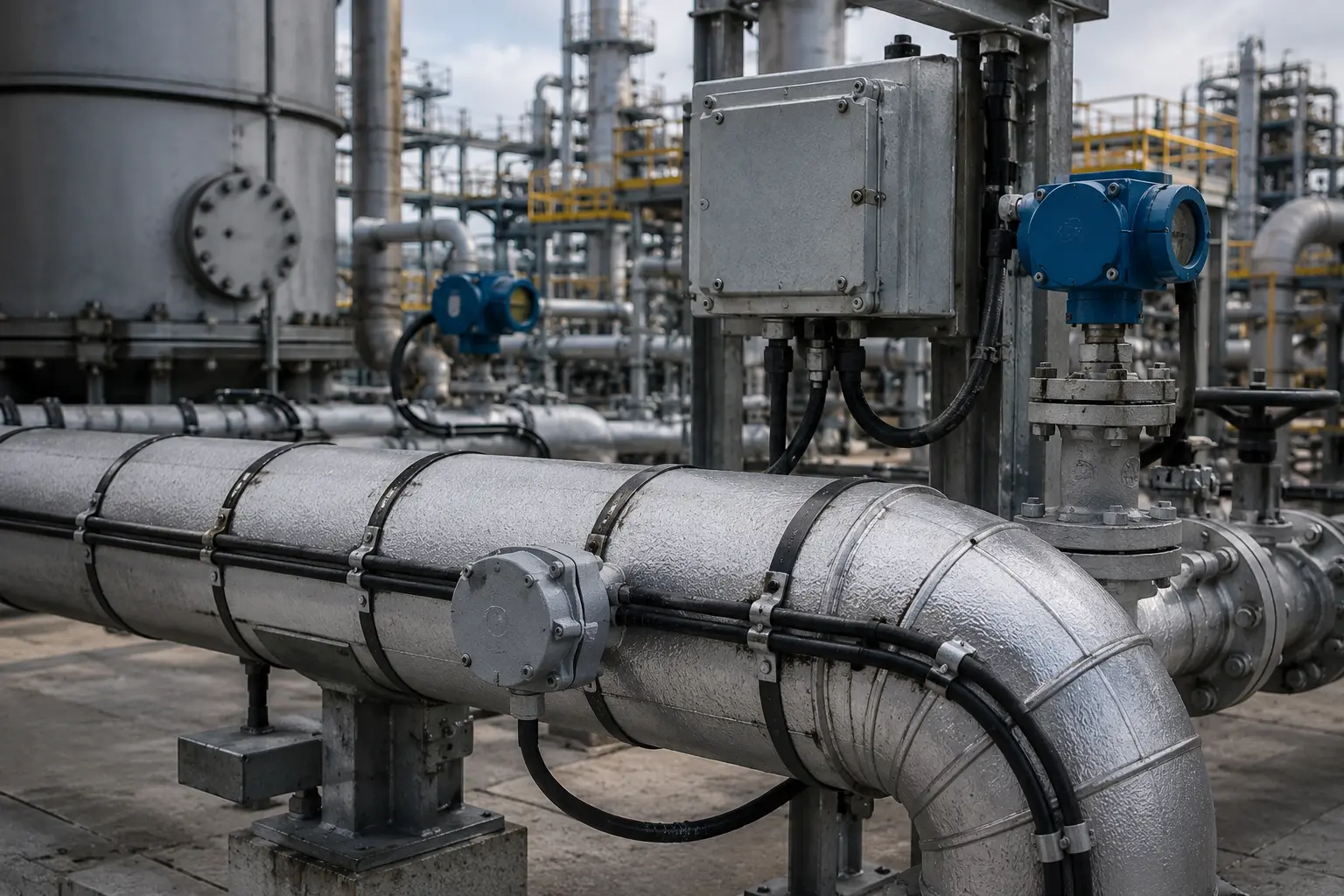
Heat tracing applications in explosion-proof environments are critical for maintaining process continuity while ensuring maximum safety in hazardous industrial zones. Ex-proof heat tracing systems are specifically designed to prevent freezing, maintain fluid viscosity, and keep process temperatures within required limits in areas where flammable gases, vapors, or dust may be present. These systems must be engineered with strict adherence to international safety standards, as even minor failures can lead to severe operational and safety risks. Selecting the right components, including cables, junction boxes, sensors, and control systems, is essential for ensuring safe performance. Additionally, installation and commissioning must follow rigorous procedures to avoid potential ignition sources. Industrial heat tracing application practices in sectors such as oil & gas, petrochemical, and energy demand high precision and engineering expertise. Adatech approaches such projects with a comprehensive engineering perspective, covering design, installation, and commissioning processes to deliver reliable and compliant solutions. Ensuring long-term performance in ex-proof areas requires careful planning, correct equipment selection, and ongoing maintenance strategies tailored to hazardous environments.
Heat tracing in explosion-proof areas refers to a specialized heating solution designed to maintain or raise the temperature of pipes, tanks, and equipment in environments where flammable substances are present. A properly designed Ex-proof heat tracing system ensures that process fluids do not freeze or lose their required viscosity, while also preventing any risk of ignition. These systems differ significantly from standard heat tracing due to the strict safety requirements involved. All components used must be certified and suitable for hazardous zones. Hazardous area heat tracing applications are commonly found in industries such as oil & gas, chemical processing, and energy production. In these sectors, maintaining process temperature is not only about efficiency but also about operational safety. Therefore, engineering calculations, environmental conditions, and compliance standards must all be carefully evaluated during system design.
The working principle of these systems is based on electrical heating cables that provide controlled and uniform heat distribution across surfaces. In explosive atmosphere heat tracing applications, preventing overheating is just as important as maintaining temperature. This is achieved through advanced control systems, sensors, and safety devices. International certifications such as ATEX heat tracing and IECEx heat tracing define the requirements for equipment used in such environments, ensuring safe operation under hazardous conditions. These standards guide engineers in selecting the right materials and technologies. Adatech integrates these global standards into its engineering and implementation processes, ensuring that each project meets both safety and performance expectations.
Explosion-proof heat tracing systems involve inherent risks if not properly designed, installed, and maintained according to strict engineering and safety standards. Since these systems operate in hazardous environments, even minor mistakes can lead to severe consequences such as fire, explosion, or system failure. One of the most critical risks is the use of incorrect or non-certified components. For instance, selecting an unsuitable Ex-proof heating cable can result in overheating, which may ignite flammable gases or vapors present in the environment. Additionally, poor insulation or improper sealing at connection points can create spark risks. These systems must be designed with precise thermal calculations, considering ambient conditions, process temperature requirements, and heat loss factors. Failure to account for these parameters may compromise both safety and efficiency. In hazardous environments, every component must function reliably under extreme conditions, making engineering accuracy absolutely essential.
Another major risk factor lies in improper installation and lack of system monitoring. In a hazardous area heating system, incorrect cable routing, mechanical damage, or loose connections can significantly reduce system performance and increase safety hazards. Temperature control failures are also critical; if sensors are incorrectly positioned or malfunctioning, the system may overheat without detection. This makes control systems and safety devices like limit thermostats indispensable. Furthermore, failure to comply with zone classification for heat tracing requirements can lead to the use of equipment that is not suitable for the specific hazard level, increasing the likelihood of ignition. Adatech minimizes these risks by implementing comprehensive engineering, installation, and testing procedures tailored to hazardous environments. Proper risk assessment and preventive strategies are key to ensuring long-term safety and operational continuity in explosion-proof heat tracing applications.
Selecting heat tracing equipment for explosion-proof areas requires a detailed engineering approach that prioritizes safety, compliance, and long-term performance. The first and most critical step is understanding the environmental conditions and hazard level of the installation area. Equipment must be chosen according to the specific zone classification, ensuring compatibility with explosive gas or dust atmospheres. All components must comply with international certifications such as ATEX and IECEx to guarantee safe operation. The selection process should include heating cables, junction boxes, connection kits, sensors, and control systems that are specifically designed for hazardous environments. Additionally, factors such as ambient temperature, chemical exposure, and mechanical stress must be considered. Choosing the wrong equipment can lead to system failure or serious safety hazards. A well-engineered selection process ensures both operational efficiency and compliance with safety regulations. Adatech delivers tailored engineering solutions by carefully evaluating all these parameters in each project.
Another key consideration in equipment selection is the integration of control and monitoring systems. Temperature control units, sensors, and automation systems must be compatible with explosion-proof requirements and provide precise regulation. The type of heating cable—whether self-regulating, constant wattage, or mineral insulated—should be selected based on the application’s thermal needs and environmental conditions. Mechanical durability, corrosion resistance, and ease of installation are also important criteria. Connection components must ensure complete sealing and prevent any risk of sparking. Properly selected equipment not only enhances system reliability but also reduces maintenance costs over time. In hazardous industrial environments, a comprehensive and standards-compliant equipment selection process is essential for achieving safe and efficient heat tracing performance.
Zone classification is a fundamental aspect of designing heat tracing systems in hazardous environments, as it defines the level of explosion risk present in a given area. These zones—typically classified as Zone 0, Zone 1, and Zone 2 for gases, and Zone 20, 21, and 22 for dust—indicate how frequently explosive atmospheres may occur. Equipment used in these areas must be specifically approved for the corresponding zone to ensure safe operation. Certification systems such as ATEX and IECEx play a critical role in verifying that components meet strict safety standards. Without proper certification, even high-quality equipment may pose serious risks in explosive environments. Therefore, all system components, including cables, junction boxes, and control units, must be selected in accordance with the relevant zone classification. Failure to comply with these requirements can lead to both safety hazards and regulatory issues.
In addition to safety, certification ensures consistency and reliability across international projects. Engineers must carefully review certification markings, temperature classes, and protection types before selecting any component. Proper documentation and traceability are also essential, especially during inspections and audits. Selecting equipment that aligns with zone classification not only minimizes ignition risks but also ensures long-term operational stability. Adatech applies international standards and engineering best practices in all its projects, delivering compliant and high-performance solutions for hazardous environments.
Selecting the correct cable type, connectors, and protection class is essential for ensuring safe and efficient operation of heat tracing systems in hazardous environments. The type of heating cable must be determined based on process requirements, environmental conditions, and safety standards. Self-regulating, constant wattage, and mineral insulated cables each offer different advantages depending on the application. In explosion-proof areas, cables must be resistant to extreme temperatures, chemical exposure, and mechanical stress. Additionally, all connection components such as junction boxes, glands, and termination kits must be certified for hazardous use. Poor-quality or incompatible connectors can create gaps or loose connections, increasing the risk of sparks and system failure. Therefore, every component must be carefully selected to ensure full system integrity. Choosing the right combination of cable and connectors directly impacts both safety and long-term performance.
Protection class, typically defined by IP ratings, determines the equipment’s resistance to dust and water ingress. In harsh industrial environments, high IP-rated components are necessary to maintain system durability and reliability. Improper protection levels can lead to moisture penetration, corrosion, and eventual equipment failure. It is also critical to ensure that all sealing elements maintain their integrity over time, especially under fluctuating environmental conditions. Proper installation of connectors and glands plays a key role in maintaining the required protection class. A well-designed system considers not only operational performance but also environmental protection and safety compliance. Adatech applies rigorous engineering standards in selecting and implementing these components, ensuring reliable and certified solutions for hazardous area applications.
Temperature control is a critical component of heat tracing systems in hazardous environments, as it ensures both operational efficiency and safety. In explosion-proof areas, maintaining precise temperature levels is essential to prevent overheating, which could trigger ignition in the presence of flammable substances. Sensors play a key role by continuously measuring the surface or ambient temperature and transmitting data to the control system. These sensors must be accurately positioned to provide reliable readings and must also be certified for hazardous environments. Incorrect placement or malfunctioning sensors can lead to false readings, resulting in unsafe operating conditions. Therefore, both the selection and installation of sensors must be handled with precision and engineering expertise. A well-designed control system ensures stable operation and minimizes human intervention.
Limit thermostats act as a critical safety layer within the system by shutting down the heat tracing circuit when temperatures exceed predefined thresholds. This function is especially important in preventing thermal runaway scenarios in explosive atmospheres. All control devices, including thermostats and controllers, must comply with relevant ex-proof certifications to ensure safe operation. Integration with automation systems further enhances monitoring capabilities, allowing real-time tracking and alarm management. Regular calibration and testing of these components are also necessary to maintain accuracy and reliability over time. Adatech incorporates advanced control technologies and certified components into its solutions, ensuring both safety and performance in hazardous area applications.
Installation of heat tracing systems in explosion-proof areas requires strict adherence to engineering standards, safety regulations, and manufacturer guidelines. The installation phase is critical because even properly selected equipment can become hazardous if installed incorrectly. First, all components must be installed according to the approved project design and relevant zone classification requirements. Heating cables must be laid in a way that ensures full and uniform contact with the pipe or equipment surface to achieve efficient heat transfer. Care must be taken to avoid sharp bends, mechanical stress, or physical damage during installation. Additionally, cables should be secured using appropriate fixing materials that do not compromise insulation or create pressure points. Any deviation from recommended installation practices can lead to uneven heating, reduced efficiency, or potential safety risks. Therefore, installation must always be carried out by trained personnel experienced in hazardous area applications.
Another important consideration is the integrity of electrical connections and sealing systems. All junction boxes, cable glands, and termination kits must be properly installed to maintain explosion-proof protection. Sealing must be complete to prevent the ingress of moisture, dust, or flammable substances. Grounding connections should also be carefully implemented to ensure electrical safety. After installation, a thorough visual inspection must be conducted to verify that all components are correctly placed and secured. In addition, insulation resistance tests should be performed before energizing the system. These checks help identify potential faults before commissioning. Adatech ensures that installation processes are executed with precision and in full compliance with international standards, delivering safe and reliable systems for hazardous environments.
Testing and commissioning of ex-proof heat tracing systems are critical steps to ensure that the installation operates safely, efficiently, and in full compliance with hazardous area standards. This process begins with a comprehensive visual and technical inspection of all installed components. Heating cables, junction boxes, sensors, and control panels must be checked against the project design and certification requirements. Insulation resistance tests are then conducted to verify the electrical integrity of the system and to detect any potential leakage currents. These tests are essential in preventing short circuits and minimizing ignition risks in hazardous environments. In addition, continuity tests are performed to ensure that all electrical circuits are complete and functioning as intended. All ex-proof components must also be verified for proper certification and correct installation. This structured testing approach ensures that the system is safe to energize and operate under real conditions.
During the commissioning phase, the system is energized and monitored under controlled conditions to validate its operational performance. Temperature sensors are tested to confirm accurate readings, and control systems are evaluated to ensure they respond correctly to temperature changes. Limit thermostats are also tested to verify that they shut down the system when predefined temperature thresholds are exceeded. These safety mechanisms are essential in preventing overheating in hazardous zones. Furthermore, system performance is analyzed to confirm uniform heat distribution and compliance with process requirements. If the system is integrated with automation, alarms and monitoring functions must also be tested thoroughly. All results are documented to provide traceability and support future maintenance activities. Adatech applies detailed testing and commissioning procedures to guarantee safe and reliable system operation in explosion-proof environments.
Planning maintenance for heat tracing systems in explosion-proof areas is essential to ensure long-term safety, reliability, and operational efficiency. Since these systems operate in hazardous environments, maintenance must follow a structured and preventive approach rather than relying solely on reactive interventions. The first step in maintenance planning is establishing a schedule based on operating conditions, environmental factors, and system criticality. Regular visual inspections should be conducted to identify any physical damage to heating cables, insulation, or connection points. Particular attention must be given to sealing components, as any degradation may compromise explosion-proof integrity. Temperature performance should also be monitored continuously to detect abnormal fluctuations. Preventive maintenance helps identify potential issues before they escalate into major failures. In hazardous environments, even minor faults can pose serious risks, making routine checks indispensable. Adatech implements systematic maintenance strategies to ensure continuous and safe operation of heat tracing systems.
In addition to visual inspections, electrical testing plays a crucial role in maintenance procedures. Insulation resistance tests should be performed periodically and compared with baseline values recorded during commissioning. Any deviation may indicate cable degradation or moisture ingress. Sensors must be calibrated regularly to ensure accurate temperature readings, while limit thermostats should be tested to confirm proper shutdown functionality. Control panels and automation systems should also be inspected to verify alarm and monitoring performance. Environmental factors such as dust, humidity, and chemical exposure must be considered, and cleaning or protective measures should be applied where necessary. All maintenance activities should be documented to maintain traceability and support future diagnostics. A well-planned maintenance strategy not only enhances system lifespan but also minimizes downtime and operational risks in explosion-proof areas.

In industrial safety, evaluating the potential hazards of gases is of paramount importance. The Lower Explosion Limit (LEL) is a...
Devamını Oku
An actuator is a key component in many engineering and automation system, acting as the bridge between control signals and...
Devamını Oku
Redundant SCADA refers to a fail-safe monitoring and control system architecture designed to ensure uninterrupted data communication and high availability...
Devamını Oku