



How to Ensure SCADA Security and What Are the Cyber Risks?
Industrial automation systems form the backbone of modern infrastructure, enabling real-time monitoring and control of complex operational processes. From energy...
Devamını Oku
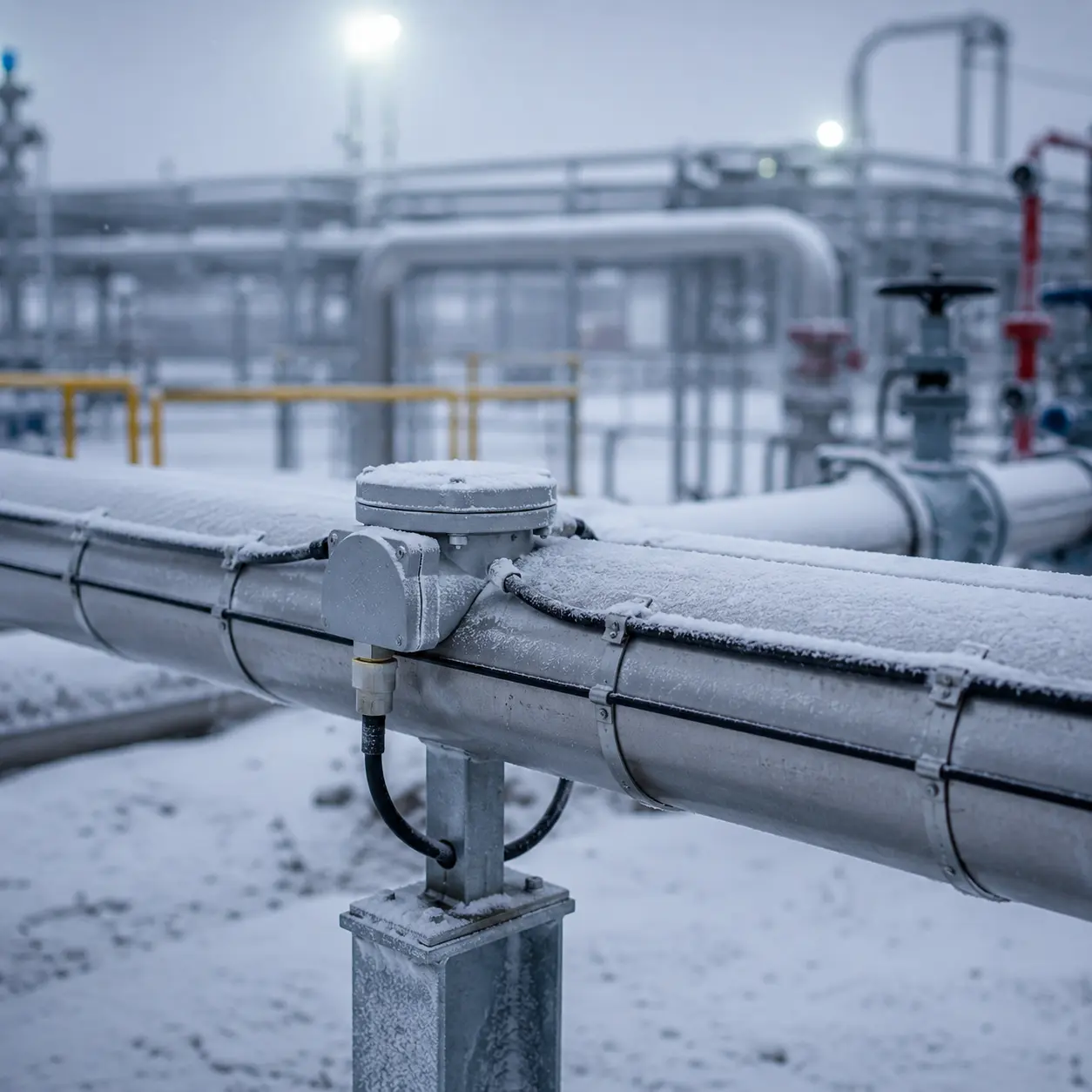
Outdoor pipelines are constantly exposed to environmental conditions such as low temperatures, wind, and humidity, all of which can significantly increase the risk of freezing. When the temperature drops below the freezing point of the fluid inside the pipeline, the fluid can solidify, causing blockages, pressure build-up, and even structural damage to the pipe. This makes outdoor pipeline heat tracing a critical solution in many industrial applications. Heat tracing systems work by maintaining the temperature of the pipeline above a predefined level, ensuring that the fluid remains in a stable and flowable state. In industries such as oil & gas, chemical processing, and water management, preventing freezing is not only about maintaining efficiency but also about ensuring operational safety.
A properly designed heat tracing system plays a vital role in ensuring continuous operation and minimizing downtime. By integrating heating cables along the pipeline, the system compensates for heat loss and maintains the required temperature. This approach is especially important for pipeline freeze protection, where even a short interruption can lead to costly repairs and production losses. Adatech, with its strong engineering background and innovative approach, provides comprehensive solutions from design to installation and commissioning, ensuring that each project meets international standards and site-specific requirements . In addition, a well-implemented electric heat tracing system improves reliability, reduces maintenance needs, and enhances the overall efficiency of pipeline operations in harsh outdoor environments.
The risk of freezing in outdoor pipelines primarily arises due to direct exposure to low ambient temperatures and harsh environmental conditions. When the surrounding temperature drops below the freezing point of the fluid inside the pipe, heat loss from the pipeline accelerates. Factors such as wind speed significantly increase convective heat loss, causing the pipe surface to cool rapidly. Without proper pipeline insulation, the internal temperature cannot be maintained, leading to freezing. Additionally, pipelines installed in open areas without shelter are more vulnerable to sudden temperature drops, especially during nighttime or extreme weather conditions.
Another major factor contributing to freezing is the flow condition of the fluid. When the flow rate decreases or stops entirely, the fluid loses its internal heat distribution, creating cold spots within the pipeline. This situation increases the need for freeze protection for pipes, particularly in systems carrying water, chemicals, or viscous fluids. In industrial environments, freezing not only disrupts operations but can also damage equipment and cause safety risks. Therefore, implementing industrial heat tracing solutions becomes essential to maintain process stability and prevent costly downtime. Outdoor pipelines must be carefully designed with environmental and operational factors in mind to effectively mitigate freezing risks.
A heat tracing system prevents freezing in pipelines by supplying controlled heat along the pipe surface to compensate for heat loss to the surrounding environment. This is typically achieved by installing a heating cable system along the length of the pipeline, which continuously or intermittently provides heat depending on system design. The added heat ensures that the fluid temperature remains above its freezing point, even in extremely cold conditions. A properly engineered pipe heating system distributes heat evenly, eliminating cold spots that could otherwise lead to localized freezing. This consistent temperature maintenance is essential for keeping fluids in a liquid and flowable state.
Modern systems often utilize a self-regulating heat tracing cable, which automatically adjusts its heat output based on the surrounding temperature. This means the system delivers more heat in colder areas and reduces output when temperatures rise, optimizing both safety and efficiency. Additionally, an advanced electric heat tracing system integrates sensors and control units that monitor pipeline temperature in real time and activate heating only when necessary. These intelligent controls not only prevent freezing but also reduce energy consumption and extend system lifespan. As a result, heat tracing provides a reliable, efficient, and scalable solution for protecting outdoor pipelines against freezing.
Designing an effective heat tracing system for frost protection requires a comprehensive evaluation of multiple engineering parameters. The first step is analyzing environmental conditions such as minimum ambient temperature, wind speed, and exposure level of the pipeline. These factors directly influence the rate of heat loss and determine the heating capacity required. Additionally, the type of fluid being transported, its freezing point, and required process temperature must be clearly defined. Without accurate data, the system may either underperform or consume excessive energy. Therefore, proper planning ensures reliable pipeline freeze protection while optimizing operational costs.
Another critical aspect is the integration of system components, including insulation, cable type, and control mechanisms. A well-designed industrial heat tracing solution considers not only initial installation but also long-term performance, maintenance, and energy efficiency. The selection of suitable materials and technologies ensures durability under harsh outdoor conditions. Furthermore, automation systems should be incorporated to monitor and regulate temperature effectively. Adatech approaches each project with a tailored engineering perspective, combining innovation and technical expertise to deliver efficient and sustainable solutions that meet international standards .
In heat tracing design, pipe diameter, fluid type, and required protection temperature are key factors that directly influence system performance and efficiency. As the pipe diameter increases, the surface area exposed to ambient conditions also grows, resulting in higher heat loss. This requires a more robust pipe heating system to maintain the desired temperature לאורך the pipeline. Larger pipes may need higher wattage cables or multiple cable runs to ensure uniform heat distribution. Therefore, accurate sizing and heat load calculations are essential to avoid underheating or unnecessary energy consumption.
The type of fluid transported within the pipeline is equally important. Different fluids have varying freezing points, viscosities, and thermal properties, all of which affect how heat must be applied. For instance, water requires simple freeze protection for pipes, while chemicals or oils may need precise temperature maintenance to remain flowable. The defined protection temperature must always stay above the fluid’s freezing or critical viscosity point. A well-designed electric heat tracing system ensures that this temperature is consistently maintained, preventing operational disruptions and ensuring safe, efficient pipeline performance.
Heat loss calculation is one of the most critical steps in designing an effective heat tracing application for outdoor pipelines. The amount of heat lost from a pipeline depends on several variables, including ambient temperature, wind speed, pipe material, and surface exposure. In colder climates, especially with strong winds, heat dissipation increases significantly, requiring a more efficient heating cable system to compensate for these losses. Accurate heat loss calculations ensure that the selected system provides sufficient heat output without oversizing, which could lead to unnecessary energy consumption and higher operational costs.
Insulation plays a vital role in minimizing heat loss and improving overall system efficiency. Properly installed pipeline insulation helps retain the heat generated by the tracing system, allowing the pipeline to maintain the desired temperature with less energy input. The thickness and type of insulation must be carefully selected based on environmental conditions and process requirements. Additionally, ambient temperature variations must always be considered during the design phase, as extreme fluctuations can impact system performance. A well-balanced combination of insulation, accurate calculations, and environmental awareness ensures a reliable and energy-efficient industrial heat tracing solution.
Selecting the appropriate heater cable is a crucial step in ensuring the effectiveness and reliability of a heat tracing application. The cable type must be chosen based on pipeline length, environmental conditions, and required heat output. Options such as constant wattage, mineral insulated, and self-regulating heat tracing cable each offer different advantages depending on the application. In outdoor environments, durability and adaptability are essential, making self-regulating cables a popular choice due to their ability to automatically adjust heat output. A properly selected heating cable system ensures uniform temperature distribution and minimizes the risk of overheating or insufficient heating across the pipeline.
Equally important is the control system, which governs how and when the heat tracing operates. Advanced control units equipped with sensors and thermostats continuously monitor pipeline temperature and activate the system only when needed. This not only enhances safety but also improves energy efficiency. A well-integrated electric heat tracing system allows for precise temperature management and can be connected to centralized automation systems for large-scale operations. These intelligent controls help extend system lifespan, reduce maintenance requirements, and ensure consistent performance, especially in demanding industrial heat tracing applications.
The installation of heat tracing in outdoor pipelines requires a systematic and carefully engineered approach to ensure long-term performance and safety. The process begins with a detailed assessment of the pipeline layout, including length, diameter, and environmental exposure. Based on this analysis, the appropriate components for pipeline freeze protection are selected. Before installation, the pipe surface must be cleaned thoroughly to remove dirt, oil, or corrosion that could hinder heat transfer. Once prepared, the selected heating cables are installed either linearly or in a spiral configuration along the pipe. This ensures consistent heat distribution throughout the system. A properly installed pipe heating system guarantees that the pipeline maintains the required temperature even under extreme weather conditions.
After the heating cables are secured, insulation is applied to minimize heat loss and improve system efficiency. High-quality pipeline insulation is essential to retain the generated heat and reduce energy consumption. Following insulation, temperature sensors, thermostats, and control panels are installed to complete the heat tracing system. These components enable automatic monitoring and regulation of the pipeline temperature, ensuring that the system operates only when necessary. Finally, testing and commissioning are carried out to verify proper functionality and safety compliance. A professionally executed installation not only enhances system reliability but also extends the operational lifespan of the entire electric heat tracing system.
Energy efficiency in heat tracing systems is achieved through proper system design, accurate heat loss calculations, and the use of advanced technologies. Selecting the right capacity for a heat tracing system ensures that only the necessary amount of energy is used to maintain the required temperature. Oversized systems lead to excessive energy consumption, while undersized systems fail to provide adequate protection. One of the most effective solutions is the use of a self-regulating heat tracing cable, which automatically adjusts its heat output depending on ambient conditions. This dynamic behavior allows the system to consume less energy when temperatures are higher and increase output only when needed, ensuring optimal performance.
Another key factor in improving efficiency is the integration of smart control and monitoring systems. An advanced electric heat tracing system uses sensors, thermostats, and automation panels to track temperature in real time and activate heating only when required. This prevents unnecessary operation and reduces energy waste. Additionally, proper pipeline insulation plays a critical role by minimizing heat loss and allowing the system to maintain temperature with lower energy input. In large-scale industrial heat tracing applications, centralized control systems further enhance efficiency by optimizing performance across multiple pipelines. Combining intelligent controls, quality insulation, and adaptive heating technologies ensures maximum energy savings and long-term operational efficiency.
Heat tracing should be used for outdoor pipelines whenever environmental conditions pose a risk to fluid stability or process continuity. In regions where ambient temperatures drop near or below the freezing point of the transported fluid, implementing outdoor pipeline heat tracing becomes essential. Pipelines carrying water, chemicals, or temperature-sensitive fluids are particularly vulnerable, as freezing can lead to blockages, pressure build-up, and potential damage. In such cases, a well-designed pipeline freeze protection solution ensures that operations continue safely and without interruption, even in harsh winter conditions.
Additionally, heat tracing is not only used to prevent freezing but also to maintain specific process temperatures. Certain fluids require consistent heat to remain flowable or to preserve their chemical properties. In these scenarios, a reliable pipe heating system supported by an efficient electric heat tracing system provides continuous temperature control. Industries such as oil & gas, chemical processing, and water treatment frequently rely on industrial heat tracing to ensure operational efficiency. By proactively applying heat tracing in outdoor pipelines, companies can reduce maintenance costs, prevent downtime, and extend the lifespan of their infrastructure while ensuring safe and consistent performance.

Industrial automation systems form the backbone of modern infrastructure, enabling real-time monitoring and control of complex operational processes. From energy...
Devamını Oku
Cathodic protection is an advanced electrochemical method used to prevent corrosion in metal structures. Corrosion occurs when metal surfaces react...
Devamını Oku
In industrial automation, Distributed Control Systems (DCS) play a crucial role in managing and optimizing large-scale production and process control....
Devamını Oku