



What is FSRU? Floating LNG Storage and Regasification Units
In today’s rapidly evolving energy landscape, adaptable and innovative technologies play a crucial role in shaping national and global energy...
Devamını Oku

A transformer is an essential device in electrical systems designed to transfer electrical energy between circuits. It efficiently converts voltage levels, allowing electricity to travel long distances with minimal losses and be distributed safely to homes, businesses, and industries. What does transformer mean? This term encompasses devices used in power generation, transmission, and distribution systems to regulate energy flow.
A substation and its transformers play a critical role in managing energy transfer from high-voltage transmission lines to lower voltages suitable for end users. What is a transformer and what does it do? The answer lies in its ability to optimize electricity usage, ensuring reliability and cost-effectiveness.
Transformers come in various forms, from dry type transformers to those built for outdoor use. They are indispensable in enabling the modern electrical grid to function efficiently. Their design, types, and applications are tailored to meet specific needs across industries.
A transformer is an electrical device that transfers energy between two or more circuits through electromagnetic induction. It is primarily used to change the voltage level of alternating current (AC), either stepping it up for long-distance transmission or stepping it down for safer usage in homes and businesses. This process allows efficient energy transportation across large distances while minimizing power loss.
The main components of a transformer are the primary winding, secondary winding, and a magnetic core. When an alternating current flows through the primary winding, it creates a magnetic field in the core, inducing voltage in the secondary winding. This voltage can either increase or decrease, depending on the application.
Transformers are integral to modern electrical infrastructure. Whether in energy production, transmission, or end-user applications, transformers ensure energy flows smoothly and efficiently. Understanding what is a transformer is key to grasping its vital role in energy management.
A substation is a facility within an electrical distribution system that transforms high-voltage electricity from power plants into lower voltages suitable for delivery to homes, businesses, and industrial facilities. Substations are essential in ensuring the safe and efficient transfer of energy across the electrical grid.
Substations house key equipment, including transformers, switchgear, circuit breakers, and control systems. These components work together to regulate voltage, control power flow, and protect the system from faults. Substations can be found in outdoor or indoor setups, depending on the geographic and operational requirements.
The primary purpose of a substation is to act as a hub where electricity is processed and redirected. They are integral to maintaining grid stability and ensuring that electricity reaches end-users in a reliable and controlled manner. By understanding what is a substation, one gains insight into the backbone of modern power distribution networks.
A transformer serves a crucial purpose in the generation, transmission, and distribution of electricity. Its primary function is to modify voltage levels, either stepping them up or down, to meet the specific needs of the electrical system. High voltage is essential for efficient long-distance energy transmission, while lower voltage is safer and more practical for residential, commercial, and industrial use.
In power transmission systems, transformers reduce energy loss by increasing the voltage at the generation source. When the energy reaches a substation, another transformer reduces the voltage to safe levels for end users. This dual functionality ensures energy is delivered efficiently and cost-effectively.
Additionally, transformers enable compatibility between different electrical devices and systems. By adjusting voltage and current, they protect equipment from damage and optimize performance. Whether in industrial applications or residential settings, understanding what does a transformer do highlights its indispensable role in modern power infrastructure.
A transformer operates based on the principle of electromagnetic induction, which allows the transfer of electrical energy between two circuits without physical contact. It consists of three main components: the primary winding, the secondary winding, and a magnetic core that links the two windings.
Here’s how it works:
Transformers can either step up (increase) or step down (decrease) voltage levels. This process is efficient, as there are minimal energy losses, and it ensures the safe and effective delivery of power across electrical grids. Understanding how the transformer works is fundamental to appreciating its role in modern energy systems.
Transformers are categorized based on their design, purpose, and operation. Understanding transformer types helps identify the right one for specific applications in power systems, industries, and residential settings. Here are the main classifications:
Transformer Types According to Intended Use
Transformer Types According to Working Principle
Transformer Types According to Phase Number
Each type serves specific needs, from ensuring safety to optimizing performance. These classifications underline the versatility of transformers in electrical systems.
Transformers are designed for specific applications, making them indispensable in various power systems. Here’s a breakdown of the main types:
Power transformers are used in electrical power generation and transmission systems to handle high voltage and large amounts of energy. Their primary purpose is to step up voltage for long-distance transmission, reducing energy loss. These transformers are typically found in substations and power plants.
Distribution transformers step down voltage levels for residential, commercial, and small industrial users. They operate at lower voltages compared to power transformers and are designed for continuous use, ensuring energy delivery to end-users.
Measurement transformers are specialized devices for accurately measuring voltage and current in high-power systems. They ensure safe and precise monitoring, which is essential for energy management and fault detection.
Insulating transformers serve to electrically isolate circuits, improving safety and preventing fault propagation. These transformers are commonly used in sensitive applications, such as medical equipment and laboratory setups.
Auto transformers share windings between the primary and secondary circuits, making them more compact and cost-effective. They are ideal for voltage regulation and applications requiring small voltage adjustments.
The working principle of transformers varies based on their cooling and insulation methods. Below are the two primary types:
Dry type transformers use air as the cooling medium, eliminating the need for oil. These transformers are designed for indoor applications where fire safety is a concern, such as hospitals, schools, and commercial buildings. The windings and core are encapsulated in a material like epoxy resin, providing excellent insulation and resistance to environmental factors.
Oil type transformers use specially formulated oil for both cooling and insulation. The oil circulates within the transformer, dissipating heat generated during operation. These transformers are ideal for outdoor installations and heavy-duty applications, such as in substations and industrial facilities. Their robust design allows them to handle higher loads efficiently.
Transformers can be categorized based on the number of phases they operate with, which determines their application in different electrical systems.
Single phase transformers are designed for low-power applications. They are commonly used in residential areas and small electrical devices, where the power demand is minimal. These transformers are compact, cost-effective, and easy to install, making them ideal for localized energy needs.
Three phase transformers are used in high-power applications, such as industrial facilities, power plants, and large-scale electrical grids. They are more efficient for transmitting and distributing electricity over long distances. Their ability to handle higher loads makes them indispensable for modern infrastructure.

In today’s rapidly evolving energy landscape, adaptable and innovative technologies play a crucial role in shaping national and global energy...
Devamını Oku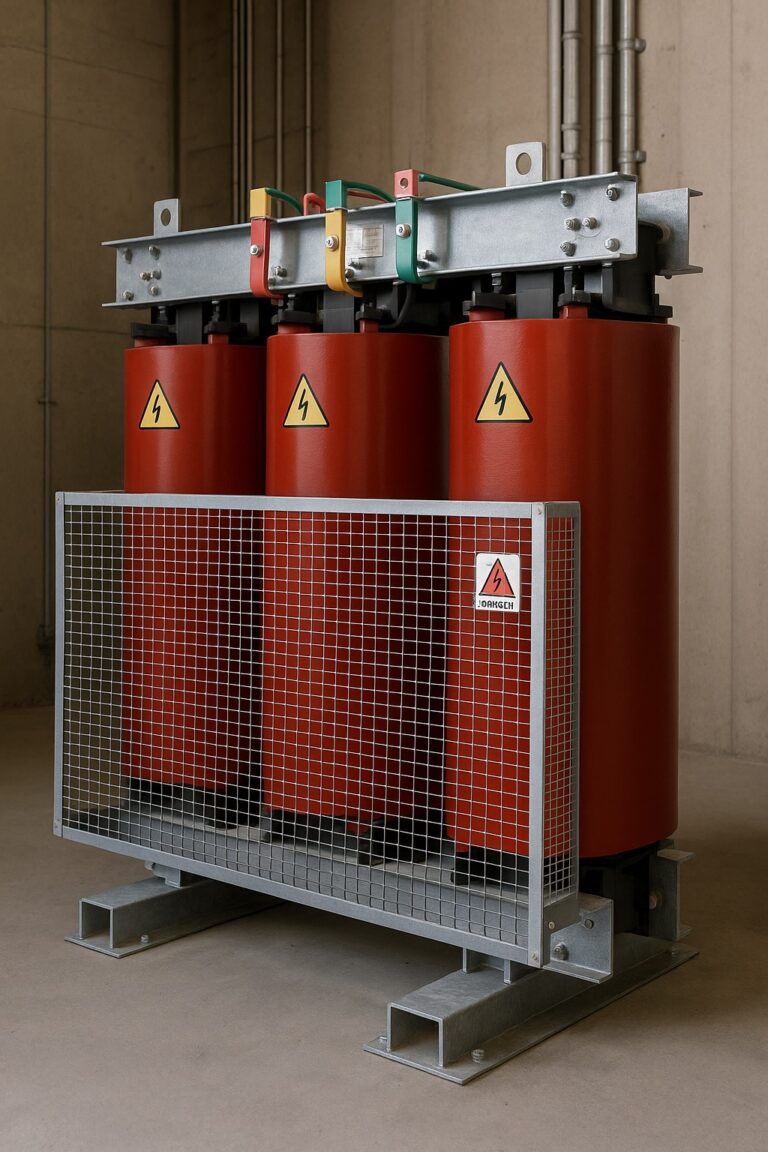
A dry-type transformer is a type of electrical transformer that operates without the use of liquid insulation, making it a...
Devamını Oku
Artificial Intelligence (AI) and Machine Learning (ML) are set to revolutionize the future of industrial automation, enabling smarter, more adaptive...
Devamını Oku